


TFGBV Policy Dialogue Series - Session 2
The second session of the Technology-Facilitated Gender-Based Violence (TFGBV) Policy Dialogue Series, co-hosted by UN Women and the SVRI Community of Practice on TFGBV, brought together governments, regulators, feminist activists, and researchers to tackle a critical question:
How do we move from global commitments to effective national action that protects women and marginalised communities online?
Building on the first session, which set the global normative scene, this dialogue focused squarely on implementation—what works, what doesn’t, and what must change to close the gap between policy commitments and real-world impact.
While they are just one component of the puzzle, legislation and regulation as a safeguarding tool are vital in terms of setting the right, enabling environment and policy architecture to make sure and make clear that no form of violence against women and girls will be tolerated or condoned.” – Ani Lamont, eSafety Commission, Australia
The urgency of this work is underscored by the pace at which technology, and particularly artificial intelligence, is evolving. As digital tools become more powerful and more pervasive, so too do the risks. In this rapidly shifting environment, effective action requires not only strong policies, but also agile, well-resourced systems that can adapt to emerging forms of harm and centre the needs of those most affected. This means we need to move fast, anticipate risks and update responses in real time, ensuring that survivor-centred protections keep pace with the speed of innovation.
Global frameworks are not enough
TFGBV is firmly on the global agenda, with legal and normative advances at the global and regional levels. But as speakers emphasized, even when standards are reflected in national legal frameworks, laws alone will not keep women and girls safe in digital spaces.
Legislation is vital, but it cannot be the only tool—prevention, survivor-centered services, and multi-stakeholder action are equally essential.” – Ani Lamont, eSafety Commission, Australia
Progress remains uneven: 65% of countries have introduced TFGBV measures, but fewer than half have invested in institutional capacity, and collaboration with tech providers is still limited. Survivors, especially in the Global South, remain at the margins of decision-making.
What we learned from national experiences
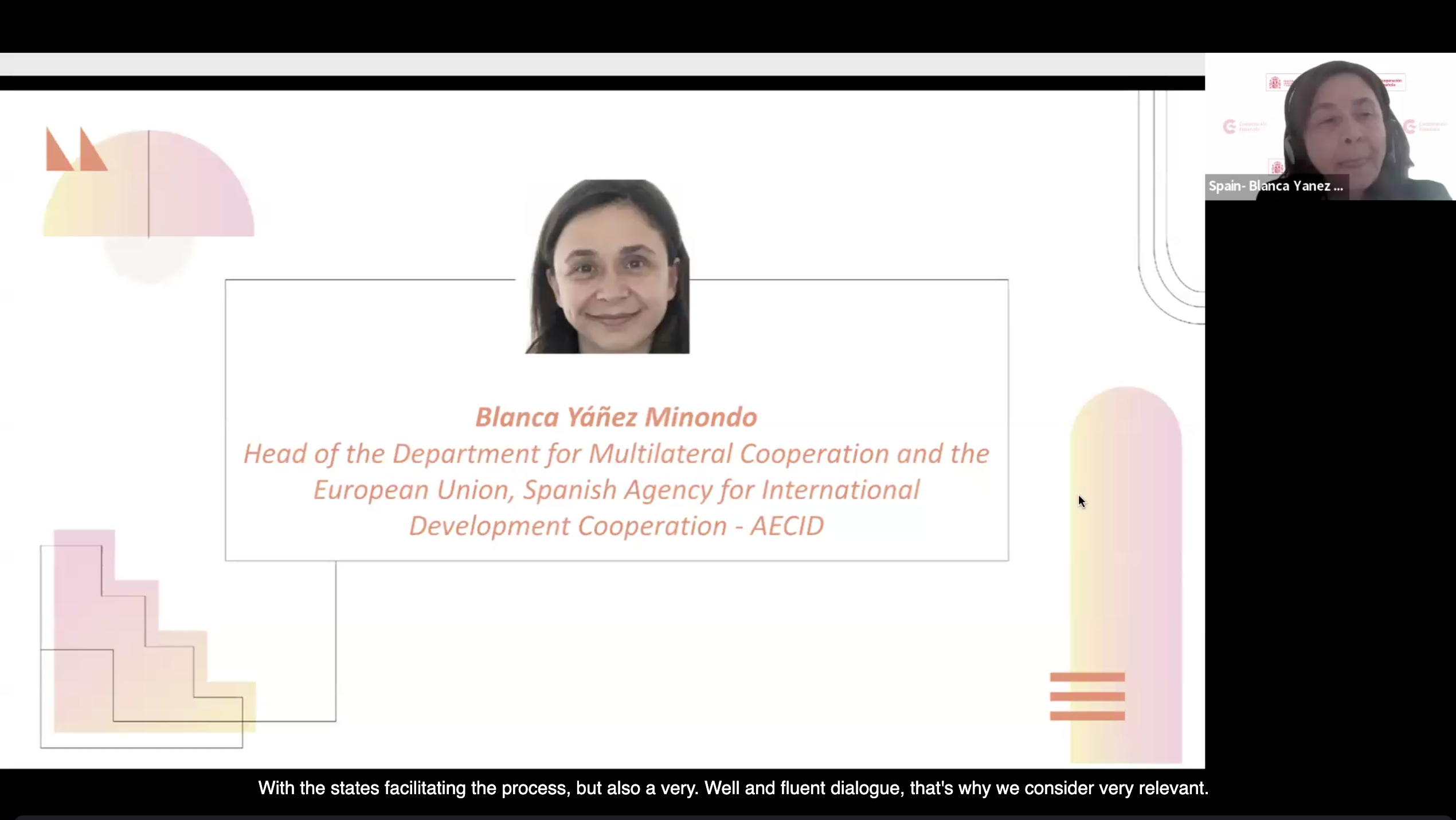
Inclusive partnerships and financing with transformative intent – Spain
Blanca Yanez Minondo (AECID, Spanish Agency for International Development Cooperation) stressed that implementation requires alliances between governments, women’s organizations, and tech companies. Spain is providing support to the piloting of a comprehensive TFGBV model in Mexico and Bolivia, in collaboration with UN Women, to test what works, focusing on legal reform, improved victim services, and data generation.
Legislation should be comprehensive, clear, grounded in human rights and capable of adapting to technology change, which is very dynamic, and to diverse contexts.” – Blanca Yanez Minondo, AECID
She also underlined the need for adequate, targeted financing—investing not just more, but better, to close structural gender gaps. Blanca highlighted Spain’s commitments under its feminist cooperation policy, including its goal of allocating 0.7% of Gross National Income to development cooperation by 2030 and mobilizing targeted funding to advance real and effective gender equality. Financing, she emphasized, must have a transformative intent, guided by robust evidence and participatory communication strategies to make digital violence visible and build collective awareness.
Regulation as part of a bigger toolbox – Australia
Ani Lamont described how the Online Safety Act 2021 and Basic Online Safety Expectations are holding major platforms accountable through transparency reporting and product-safety reviews. But she warned that legislations and regulations are only one piece of the puzzle:
- Emerging harms, like AI-generated deepfakes, are moving faster than legal frameworks.
- Prevention is equally critical to response. There is a need to address the underlying drivers, attitudes and factors that enable abuse—Australia funds community-based prevention projects that work directly with at-risk groups, educators, and community leaders to shift harmful gender norms and build digital literacy. These initiatives are designed not just to respond to harm but to stop it before it occurs.
- Global cooperation is essential given the cross-border nature of TFGBV.
Regulation creates a shift in the focus away from what is happening at the individual level to placing a responsibility and an onus on major multi-billion dollar companies, to consider and address the way that their products cause harm or risk or impact end users.” – Ani Lamont eSafety Commission, Australia
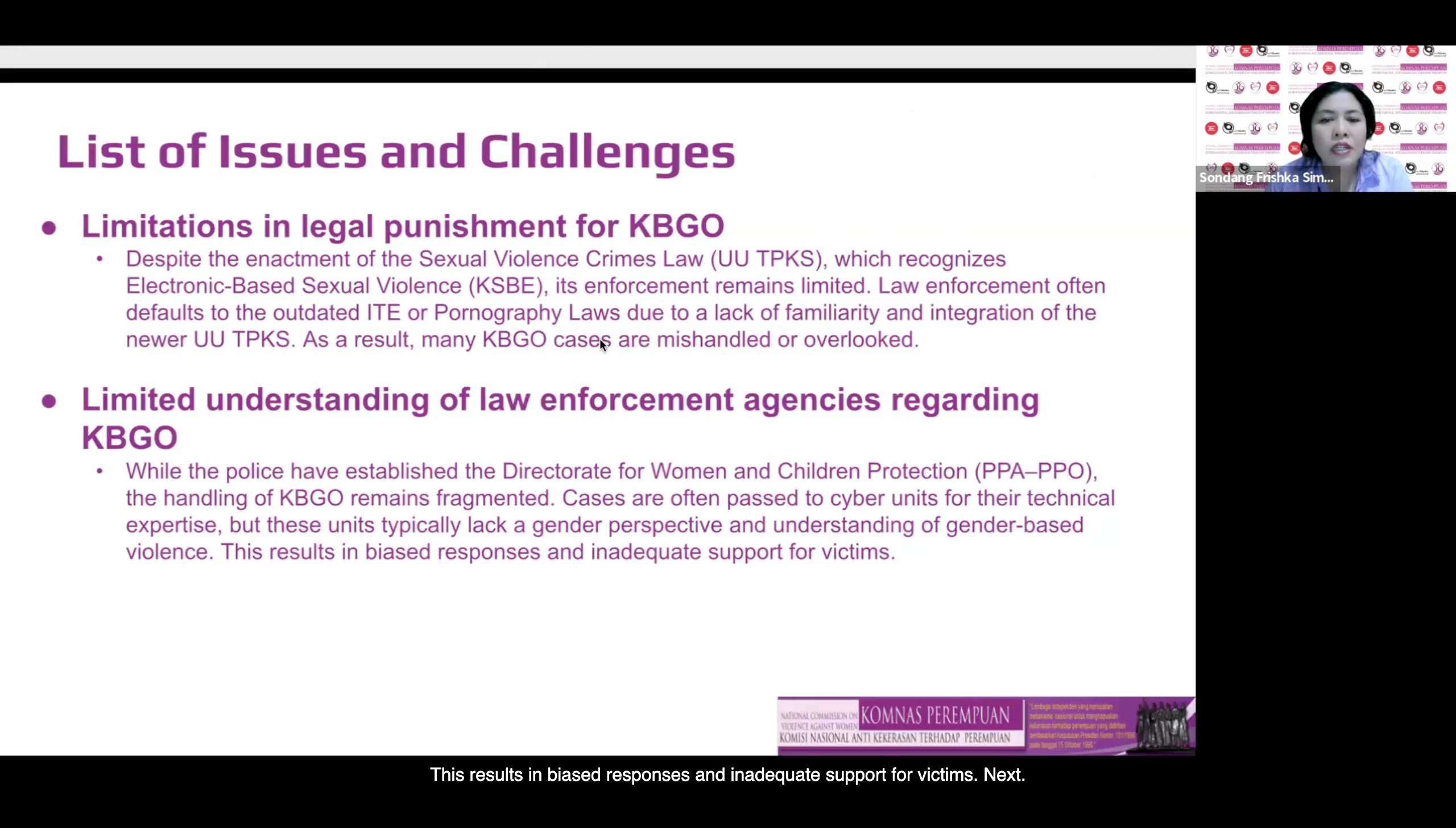
Strengthening Justice and Survivor Recovery – Indonesia
Sondang Frishka (Komnas Perempuan, Indonesia) highlighted key gaps related to weak enforcement of existing laws, fragmented cross-sectoral coordination and lack of a gender sensitive approach to dealing with TFGBV cases. Mishandling of cases may result in further trauma for survivors of TFGBV is often a consequence when cases are mishandled. She called for integrated criminal justice systems and swift digital content removal to protect survivors’ dignity and recovery.
She called for integrated criminal justice systems that link investigation, prosecution, and adjudication with accessible, survivor-centered services, and for swift digital content removal to protect survivors’ dignity and recovery.
A coordinated, gender-sensitive response—combining justice, content removal, and survivor recovery—is essential.” – Sondang Frishka, Komnas Perempuan, Indonesia
Building survivor-centered and context-specific policies – Pakistan
Nighat Dad (Digital Rights Foundation) further underscored the need for context-specific, survivor-centred approaches.
One-size-fits-all policies fail. National laws must reflect survivors’ lived realities and local contexts.” – Nighat Dad, Digital Rights Foundation
She cautioned against vaguely worded or overly broad laws, noting that they can sometimes be misused to silence women and even criminalize survivors of the very violence they aim to address.
Drawing on Digital Rights Foundation’s helpline experience, Nighat stressed the importance of consulting survivors at the policy design stage and investing in institutional capacity-building, especially for rural police and judges.
Nighat also drew attention to the need for multi-stakeholder coordination within cybercrime units to legal clinics to platform safety teams and even mental health professionals, to ensure responses are both comprehensive and survivor-centered.
Evidence and data as the backbone of policy – European Union
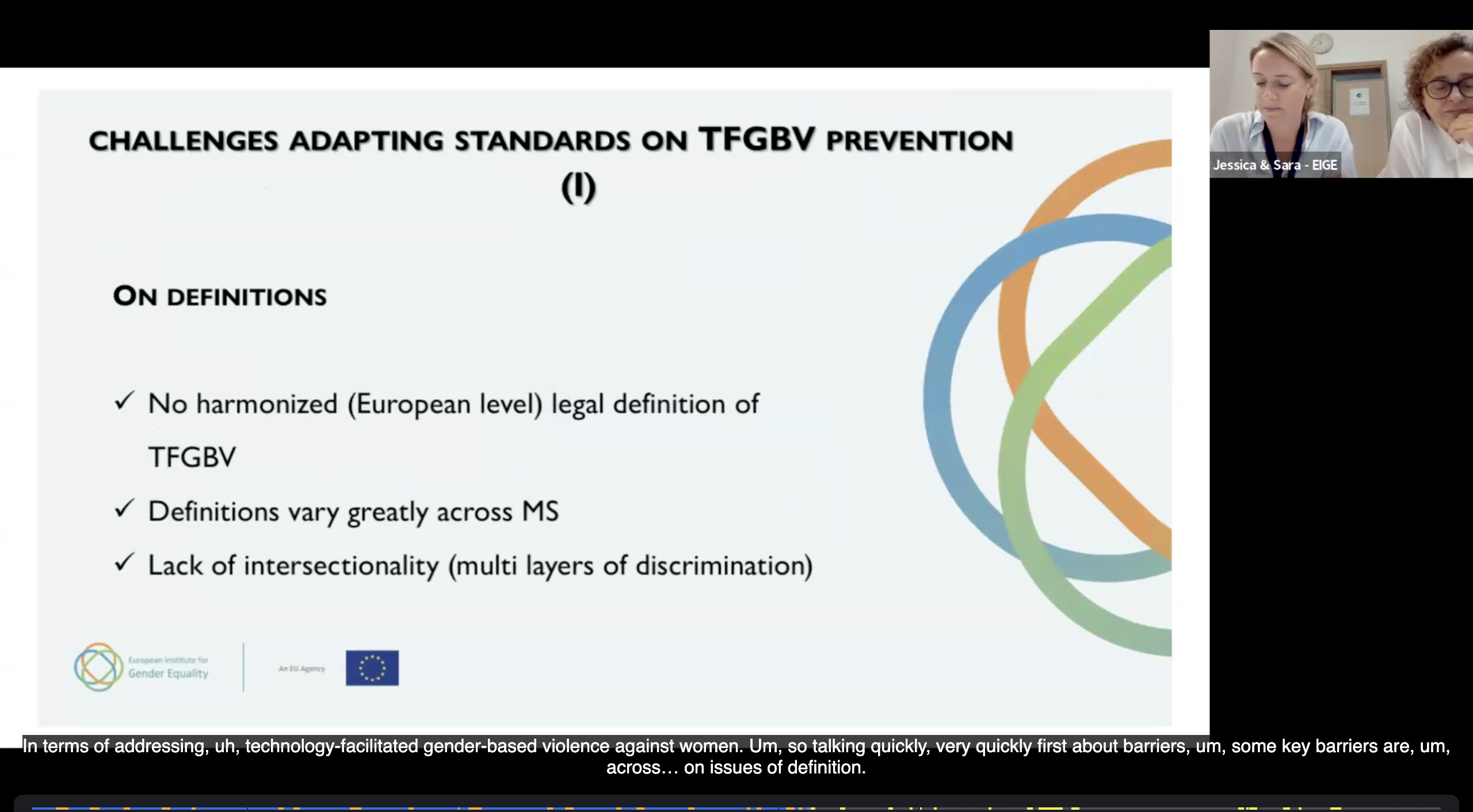
Jessica Doyle and Sara Moreira (European Institute for Gender Equality, EIGE) highlighted systemic challenges, from inconsistent legal definitions to weak enforcement and low political prioritization. Above all, they underscored the critical evidence gap:
The lack of administrative data is a major barrier. Without evidence, it’s impossible to design policies or track impact.” – Jessica Doyle, EIGE
The upcoming EU Directive on Violence Against Women and Domestic Violence provides an opportunity to harmonize definitions, collect administrative data, and strengthen enforcement across Member States.
Key shifts needed to close the gap
Across all presentations, and reflected in audience contributions to a live Miro Board exercise, five urgent shifts emerged:
- Make laws survivor-centered and gender-sensitive: Laws must protect, not punish. Participants emphasized consulting survivors in policy design, establishing survivor hotlines, and ensuring swift removal of harmful content to mitigate the risk of re-traumatization.
- Invest in institutional capacity across sectors: Police, judges, and even tech engineers need gender-sensitive training to recognize and respond to TFGBV. Multiple participants called for mandatory gender and digital safety training modules for law enforcement and regulatory agencies.
- Future-proof regulations to keep pace with technology: AI-generated abuse, deepfakes, and cross-border harassment require laws that anticipate emerging harms and align with international human rights standards. Participants stressed the need for regional cooperation mechanisms to close jurisdictional gaps.
- Close the evidence gap: Administrative data, diagnostics, and survivor-led research must feed into policies. Several participants proposed establishing shared regional TFGBV data observatories to track trends and inform rapid policy updates.
Foster multi-stakeholder partnerships: Governments cannot do this alone. Participants reinforced the need for formalized partnerships with women’s movements and tech companies, with some suggesting binding industry codes of conduct to enforce accountability.
What’s next for TFGBV policy action?
The inputs from this session, together with those from the first dialogue, will inform a set of shared, action-oriented advocacy messages to be promoted during the UNiTE Campaign and 16 Days of Activism later this year.
The next session will focus on mitigating online violence against women human rights defenders, who face escalating attacks in the current global backlash against gender equality.
To continue engaging, join SVRI’s TFGBV Community of Practice and share resources, research, or examples of national-level action.
This blog was written by Andrea De Silva, Giorgia Airoldi and Raphaëlle Rafin, UN Women.
