


The SVRI Faith & GBV Community of Practice (CoP) helps build an international development community that understands the role of faith and faith actors in gender-based violence (GBV) prevention and response, and assists in strengthening the capacity of faith actors to commit to GBV prevention and response.
The CoP is structured in four Working Groups:
 Working Group 1: Evidence Building (currently paused)
Working Group 2: Faith and Violence Against Children
Working Group 3: Faith, GBV Dialogue and Policy Engagement
Working Group 4: Religions & Theologies
Researchers, academics, practitioners, faith actors, activists, policymakers and private sector actors are encouraged to join the Working Groups of their interest.
 About the Faith & GBV CoP
Faith, faith actors, and faith communities play a crucial role in strengthening the prevention of and response to GBV, given their widespread presence, modes of interaction, and capacity for significant outreach at the grassroots level across the globe. Despite the deep historical intertwining of gender and religion, the development sector has only recently started recognising the importance of engaging faith-based entities in GBV prevention and response.
However, many faith leaders and communities, including in Africa, harbour misunderstandings or distrust towards development efforts aimed at making life safer for women, adolescent girls and children. Additionally, in various settings, religious beliefs and practices can both promote gender equality and perpetuate violence. Recognising the intergenerational nature of violence, the CoP also considers violence against children (VAC) broadly, including where it intersects with gender, to strengthen prevention and response across generations.
The SVRI Faith & GBV CoP was launched in September 2024 to build an international community of researchers, academics, practitioners, faith actors, activists, policymakers and private sector actors that understand the role of faith and faith actors in GBV prevention and response, and assists in strengthening the capacity of faith actors to commit to GBV prevention and response. The CoP currently has almost 700 registered members and functions primarily through its various Working Groups.
For more on the CoP, you can view the following meeting recordings:
Working Group 1: Evidence Building
This Working Group is currently paused.
Working Group 1 is focused on advancing research and policy at the intersection of gender, religion, and spirituality, with a particular emphasis on decolonial approaches and the experiences of young people in faith communities. The group brings together members from Africa and Latin America to develop evidence-based practices, facilitate South-South knowledge exchange, and support policy-oriented research aimed at addressing GBV within religious contexts. Key activities include organising webinars on topics such as masculinities, SOGIESC, and traditional practices, as well as conducting focus groups with faith leaders, activists, and researchers.
The outputs of WG1 are a research report for evidence-building and a policy brief that gathers evidence and experiences from Africa and Latin America, taking a deeper look at how South-South dialogue can inform more grounded and effective approaches to GBV prevention.
Working Group 2: Faith and Violence Against Children
What is the focus of this group?
The Working Group on Faith and Violence Against Children is focused on exploring the theological and practical roles of religious actors in both perpetuating and ending violence against children (VAC). It is chaired by Dr Selina Palm and brings together over 350 members from, or working within, the African continent with those beyond it to co-design and develop tangible, accessible and evidence-informed resources and educational opportunities for, and with, local faith actors and for those across different sectors who work within faith communities. Our members cover a range of professions including lawyers, doctors, social workers, researchers and faith leaders.
WG2 strengthens the relational connections and practical skills among people of diverse professions and faiths who often operate in siloed ways. It builds trust through embodied storytelling, shared peer learning and context-specific insights grounded in Global South realities. Addressing violence against all children is a crucial part of disrupting intergenerational cycles of gendered violence as well as engaging with the gendered formation of children. Adult survivors and their testimonies, insights and leadership form a core part of this group.
What do we do?
As one of its core outputs, this WG2 has collaboratively designed and piloted a twelve-week blended learning online course that is interactive, survivor-led and draws on wider members’ existing stories, expertise and practice-based knowledge to create experiential, peer-based learning around the roles of faith in helping children thrive without violence. To learn more about the course, hear directly from two of our early course graduates, read our brief outlining the course pedagogical approach, and if interested, apply to be a future participant on the future virtual course intake.
The WG2 also runs an Alumni Support Hub for its course graduates to network, support each other and share practical lessons across diverse contexts and faiths. This includes regular roundtables, social media groups and new opportunities.
The WG2 delivers regular interactive skills labs for members only. Some of the topics covered to date include:
- Reading sacred texts differently: contextual engagement for child flourishing.
- Rituals that do harm: Reimagining religious rituals to centre child dignity.
- Practical strategies for engaging religious leaders to end child marriage.
- Religion and female sexual purity – a deeper dive.
The WG2 also collaborates with other Working Groups and the wider Faith & GBV CoP to identify synergies and run selected cross-over events. Topics so far have included the gendered formation of children and female genital mutilation and the politics of purity.
Below, you can watch the recordings of two of its CoP-wide panel webinars:
- How to engage faith actors in survivor-led ways: learning from and with survivors of child violence. WG2, Panel Webinar, 26 February 2025.
- Faith and transforming intergenerational cycles of violence. WG2, Panel Webinar, 18 November 2026.
WG2 Resources
The WG2 is co-producing an ongoing series of Dialogue Briefs on a range of sensitive topics related to faith and violence against children. These draw directly on interactive learning conversations held between diverse participants from its educational course Faith and Helping Children Thrive without Violence. These aim to equip and encourage members to have courageous conversations within their own faith contexts and include key discussion questions for use in small group settings.
Dialogue Brief 1: Palm, S. (2026). Child Safety in Faith Communities: Moving from words to actions. SVRI. This brief explores how faith communities can move from words and policies into practical actions that create institutional cultures that protect and safeguard all children. Read the key learnings.
Dialogue Brief 2: Palm, S. & ur Rehman, N. (2026). Non-Violent Parenting and Faith: Reclaiming sacred teachings for child dignity, protection, and flourishing. SVRI. This brief explores how to use faith as a positive resource, rather than a roadblock, to address the issue of violent discipline and to support positive non-violent parenting.
Dialogue Brief 3: Palm, S. & Sahlim, C. (2026). Child Participation and Faith: Supporting spaces where children can be seen and heard. SVRI. This brief reflects on harmful cultural and religious norms that silence children and explores how diverse faith traditions can offer positive resources for children’s voices and meaningful participation.
Dialogue Brief 4: Palm, S., Greco, S. & Wells-Brown, T. (2026). Survivor-Led Education for Transformation: Ending violence against children in faith communities. SVRI. This brief shares practical lessons from graduates on how the course pilot became a catalytic process anchored in survivor testimony and witness, co-produced with multi-sector and faith diversity, and enabling personal engagement with religious beliefs.
How to get involved
The WG2 welcomes survivors, practitioners, faith actors, researchers, policymakers, activists and others interested in shared learning, dialogue and collaboration around issues of faith and violence against children. Members are invited to participate in webinars, skills labs and collaborative learning activities, contribute to developing and testing practical resources, and share experiences from their contexts.
Below are a number of specific ways you can get involved, learn from diverse others working at the intersection of faith and violence against children and help shape the Working Group’s future activities.
- Attend our quarterly Skills Labs or other collaborative events and webinars.
- Join our LinkedIn group to network with members and stay up to date.
- Fill out our Members Survey to tell us more about you and your interests.
- Apply for our course on Faith & Helping Children Thrive Without Violence.
- Contribute a five-minute video featuring your personal story and/or expertise to be considered for our course curriculum or offer to share at our other events.
Contact Working Group Chair: Dr Selina Palm at selinapalm@hotmail.com for more information about any of these above options or any other ideas you may have.
Working Group 3: Faith, GBV Dialogue and Policy Engagement
What is the focus of this Working Group?
The WG3 explores how dialogue between faith actors, policymakers, researchers, practitioners and activists can strengthen efforts to prevent and respond to gender-based violence (GBV). While these groups often work with the same communities, they may approach GBV from different perspectives, use different language, and draw on different sources of knowledge and legitimacy. These differences can create barriers to collaboration, but they also present opportunities for more effective, locally grounded and sustainable responses to GBV.
The WG3 seeks to better understand how trust, respectful dialogue and collaboration can bridge these differences. By bringing together diverse perspectives and encouraging shared learning, the group aims to strengthen engagement between faith actors, policymakers and the wider GBV sector, contributing to more inclusive, context-sensitive and evidence-informed approaches to GBV prevention and response.
What does the WG3 do?
The WG3 brings together members from diverse religious, professional and geographical backgrounds to exchange knowledge, share experiences and collaboratively explore how dialogue can strengthen responses to GBV. Through regular discussions, peer learning and the development of practical resources, members examine issues such as trust, power, legitimacy, language, religious literacy and context, and how these shape engagement between faith actors, policymakers and GBV practitioners.
One of the WG3’s first collaborative outputs was the GBV & Religion Dialogue Toolkit, developed to support more constructive engagement around GBV and religion. Building on this work, members explored the toolkit in practice through pilot projects in Kenya, Ethiopia and Zimbabwe, generating valuable insights into how dialogue can be facilitated across different religious, cultural and institutional contexts. These experiences reinforced the importance of trust-building, careful facilitation, survivor-centred approaches and attention to local context in creating meaningful engagement.
Through its publications, webinars and collaborative learning activities, the Working Group continues to develop practical resources and practice-based knowledge that support stronger partnerships between faith actors, policymakers and GBV practitioners, helping foster more effective and collaborative approaches to preventing and responding to GBV.
WG3 Resources
Policy Brief:
Enhancing Communication Between Faith Actors and Policymakers on Gender-Based Violence in Africa: This policy brief examines why stronger communication between faith actors and policymakers is essential for effective GBV prevention and response. It explores the risks associated with fragmented engagement, highlights the benefits of sustained collaboration, and offers practical recommendations for strengthening dialogue and policy implementation.
Toolkit:
GBV & Religion Dialogue Toolkit: Developed collaboratively by Working Group members, this practical toolkit supports faith actors and policymakers in preparing for and facilitating dialogue around GBV and religion. It provides guidance on building religious literacy, navigating differences in language and perspectives, identifying shared sources of evidence, and fostering respectful, long-term collaboration.
From Toolkit to Practice: Emerging Reflections on Faith, GBV and Dialogue in Practice: Drawing on member-led pilot projects in Kenya, Ethiopia and Zimbabwe, this report reflects on how the Dialogue Toolkit was applied across different contexts. It captures emerging lessons on trust-building, facilitation, language, power dynamics and institutional collaboration, providing practical insights for those seeking to strengthen dialogue around faith and GBV.
Infographic: Explore a visual summary of the GBV & Religion Dialogue Toolkit, highlighting key principles for fostering constructive dialogue between faith actors and policymakers.
Webinars: Watch our webinar introducing the Dialogue Toolkit and exploring practical approaches to strengthening dialogue and collaboration between faith actors, policymakers and GBV practitioners and our webinar on lessons learnt from using the toolkit in practice across diverse and complex contexts.
Video Artwork: The video below highlights four key steps to enhance this vital dialogue in the context of faith and GBV. You can also retrieve a visual summary here.
How to get involved
The WG3 welcomes researchers, practitioners, faith actors, policymakers, activists and others with an interest in strengthening dialogue and collaboration around faith and GBV. Members are invited to participate in webinars, discussions and collaborative learning activities, contribute to the development of practical resources, and share experiences from their own contexts.
Whether you are interested in applying the Dialogue Toolkit, contributing to future resources, or learning from others working at the intersection of faith and GBV, we encourage you to get involved and help shape the Working Group’s future activities.
Contact Working Group Chair: Dr Nora Khalaf-Elledge, who can be contacted through this form.
Working Group 4: Religions and Theologies
What is the focus of Working Group 4?
The WG4 is the newest addition to the SVRI Faith and GBV CoP, established in year three to create a dedicated space for some of the harder conversations at the intersection of religion, theology and gender-based violence (GBV).
Religion shapes beliefs, family life and how communities respond to violence, and faith communities are often the first institutions survivors turn to. Religion can reinforce harmful gender norms or help dismantle them. The theological reasoning behind those norms, and the potential within traditions to shift them through a gender-responsive reading of sacred texts, requires more exploration within the Faith and GBV CoP.
The WG4 fills that gap, examining how texts, wider religious doctrines and rituals are interpreted, how theological authority shapes attitudes toward women and girls, and where traditions already hold resources for dignity and survivor-centred response, bringing theologians, faith leaders, practitioners, feminists and survivor advocates into one working space across traditions. Sacred-text framing fits Christian, Islamic, Jewish and Baha’i traditions most naturally; Hindu, Buddhist and African religious traditions often locate authority in ritual, oral teaching, or founder and institutional traditions as much as text, so WG4 draws on whichever form of authority a tradition actually uses.
The WG4 is chaired by Noor Ur Rehman and co-chaired by Dr Nontando Hadebe, and brings together theologians, faith leaders, religious scholars, practitioners and researchers who are ready to engage directly with scriptural interpretation, doctrine and lived religious practice, and how these shape both harm and protection for women and girls.
The WG4 recognises that faith actors are often among the first and most trusted sources of support for survivors, while some interpretations of scripture and tradition can also reinforce silence, stigma and harmful gender norms. Rather than anchoring itself to a single contested issue, the WG4 draws on specific, real-world tensions raised by its members as an entry point into deeper theological reflection and interfaith dialogue on GBV prevention and response.
What does Working Group 4 do?
Over its first year (August 2026 to July 2027), WG4 will:
- Convene at least four virtual Working Group sessions exploring theological and doctrinal questions connected to GBV.
- Co-facilitate a joint virtual session with WG2 (Faith and Violence against Children) and a joint virtual session with WG3 (Faith, GBV Dialogue and Policy Engagement).
- Present at a CoP-wide virtual learning event, sharing emerging insights with the wider Community of Practice.
- Co-develop a Dialogue Brief and a Theological Action Framework with members, translating theological reflection into practical guidance for faith actors.
- Produce a Policy Brief distilling recommendations for donors and policymakers, drawn from the Working Group’s dialogue and theological work.
- Produce a research report mapping how theology and scriptural interpretation shape GBV prevention and response across different faith traditions and contexts.
WG4 Resources
The WG4 launched in August 2026. Its outputs, dialogue briefs, and event recordings will be added here as they become available.
How to get involved
The WG4 welcomes theologians, religious scholars, faith leaders, practitioners, researchers and others with an interest in exploring how theology and scriptural interpretation intersect with GBV prevention and response. Members are invited to help shape the group’s focus areas, take part in dialogue sessions, and contribute to the group’s outputs.
Contact Working Group Chair: Noor Ur Rehman, at noorkust2011@gmail.com for more information about getting involved or with any questions.
Library
Working Group 1: Evidence Building
- Working Group 1, (2025). Transforming faith-based responses to gender-based violence: Evidence and action from Africa and Latin America
- Cazarin, R. & Makanya, S. (2025). Faith and gender: Evidence-building for GBV prevention in Africa and Latin America. SVRI.
- Decolonising evidence? Practical approaches to Faith and GBV. Webinar, 14 November 2024.
Working Group 2: Faith and Violence Against Children
- Palm, S. (2025). Child Safety in Faith Communities: Moving from Words to Actions.
- Palm, S. & ur Rehman, N. (2026). Non-Violent Parenting and Faith: Reclaiming sacred teachings for child dignity, protection, and flourishing.
- Palm, S. & Sahlim, C. (2026). Child Participation and Faith: Supporting spaces where children can be seen and heard.
- Palm, S., Greco, S., & Wells-Brown, T. (2026). Survivor-Led Education for Transformation: Ending violence against children in faith communities.
- Palm, S. (2024). How faith leaders can help End Violence against Children. Mail & Guardian.
- How to engage faith actors in survivor-led ways: learning from and with survivors of child violence. Webinar, 26 February 2025.
- Faith and Transforming Intergenerational Cycles of Violence. Webinar, 18 November 2026.
Working Group 3: Faith, GBV ad Policy Engagement
- Khalaf-Elledge, N., & Marsso, S. (2025). Enhancing communication between faith actors and policymakers on gender-based violence in Africa. SVRI.
- Khalaf-Elledge, N., & Marsso, S. (2025). How to talk about GBV and religion: A practical toolkit for faith actors and policymakers. SVRI.
- Khalaf-Elledge, N., Adan, A., Betsu, B. D., Kalkum, B., Mudimu, L., Chauke, B., & Matsau, S. (2026). From toolkit to practice: Emerging reflections on faith, GBV and dialogue in practice. SVRI.
Practice-based Knowledge
- Abdulkarim, H.R. (2026). Faith as Resource: Engaging Muslim leaders in addressing GBV at community level. Sexual Violence Research Initiative.
Faith & GBV CoP Resources
- Journal article on the first year of the CoP: Le Roux, E., Khalaf Elledge, N., Palm, S., & Cazarin, R. (2026). Decolonising knowledge in practice: lessons from the Sexual Violence Research Initiative’s Faith & Gender-Based Violence Community of Practice. Development in Practice, 1–12.
Community Building
As an international community, the CoP is unable to rely on in-person meetings as its primary mode of engagement. However, experience has shown that meaningful connection, solidarity, and trust can still be cultivated in virtual environments. The CoP therefore continuously nurtures spaces that foster connection among members while also experimenting with new ways to strengthen this sense of community in online settings.
Networking Events
Virtual networking offers another opportunity for CoP members to get to know each other, learn from one another, and explore potential collaboration opportunities. New members are encouraged to view the recordings of past networking events.
- Networking Event 4 (14 October 2025)
- Networking Event 3 (11 February 2025)
- Networking Event 2 (6 February 2025)
- Networking Event 1 (3 February 2025)
Storytelling Circles
The CoP hosts virtual storytelling session to surface lived experiences and insights from across the network. These sessions are designed as a thoughtful and relational space, inviting participants to reflect on the role of faith in preventing and responding to violence against women and against children.
The recordings from past Storytelling Circles can be viewed below.
Capacity Strengthening
Faith & GBV PBK Practice Lab
The Faith & GBV PBK Practice Lab accompanies a cohort of CoP members through a structured supported process, where they reflect on lessons emerging from their own organisation’s work and translate these into a practical knowledge product to share with the field. The process is not a research project and does not require collecting new data; rather, it is an opportunity to surface and articulate the practice-based insights already embedded in your experience.
When a new cohort is being established, CoP members are notified by email and invited to apply.
If you have any questions about the Faith & GBV Practice Lab, please email Lisa at lisa@svri.org.
Below you can view the recordings of the 4-webinar PBK, Faith & VAW/C series.
- Webinar 1: Why does practice-based knowledge matter to faith responses to VAW/C?, 15 October 2025
- Webinar 2: Unearthing What We Know: Identifying and Collecting Practice-Based Knowledge, 20 November 2024
- Webinar 3: Making Sense of PBK: Collating, Analysing, Documenting, 22 January 2026
- Webinar 4: Communicating Practice-Based Knowledge: From Insight to Influence (audio file), 10 March 2026
Faith and Helping Children Thrive without Violence Short Course
This 12-week course is co-designed and delivered by the Working Group on Faith and VAC. Dr Selina Palm is the Course Lead and works with a diverse team of facilitators from different regions and faith traditions to build and hold an online safe space for interactive group engagement, multi-media storytelling, peer learning and evidence-informed materials and practical skills for all those committed to working with and within faith communities to end violence against children and help them to thrive. The course emphasises the realities of the African continent while also drawing on other contexts.
“This course touched places in me that most training never reaches. It wasn’t just informative; it was healing. It created a space where I felt seen, safe, and allowed to breathe. That is rare. That is why this course felt so important to me. It reminded me that stories carry truth, courage & transformation. They teach what no manual can: attitudes, empathy, and the courage to act.” – Female course participant and survivor, December 2025.
The course approach
Educating for transformation goes beyond the sharing of information to also shift patterns of thinking and feeling. This course frames education as a catalytic process that unsettles inherited assumptions, helps people to recognise and rethink how they see and feel about the world, expands their sense of agency, and equips them to question harmful structures instead of simply adjusting to them.
The course takes a survivor-led, inter-faith and multi-disciplinary team approach which centres practitioner-based insights, lived experiences and evidence-informed materials. It creates a safe container for communal engagement by participants with short videos from contributors from around the world.
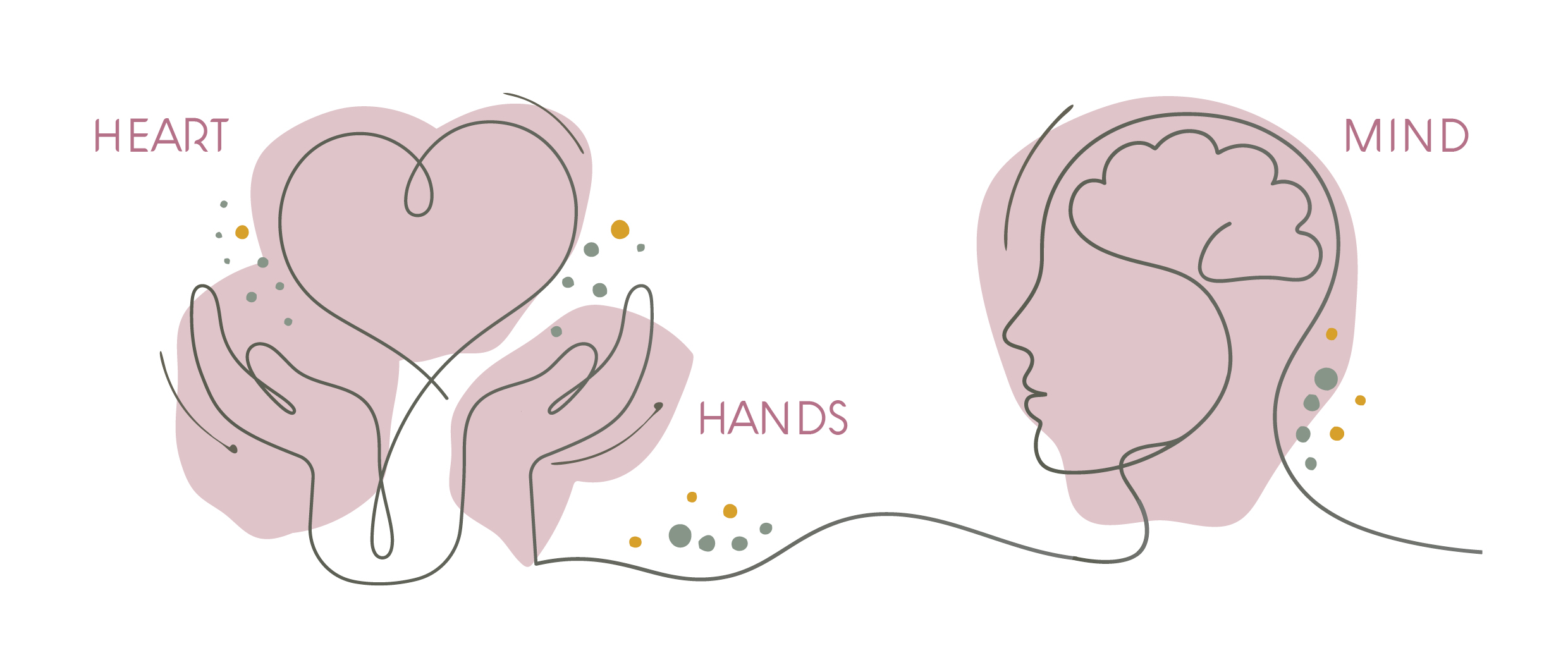
The course environment seeks to support participants to integrate their cognitive (mind) understanding (what do I think?) with affective (heart) reflection (how do I feel about this?) and practical (hands) ethical insights (what can I do?).
What commitment does the course require?
The course requires a weekly commitment from participants to actively participate in a live Zoom session of 2 hours every Monday (2-4pm SAST/GMT+1) for 12 weeks, and an additional commitment of 2 hours a week in self-directed time engaging with a multimedia online platform and participant discussion forums. It also requires a good internet connection and the ability to engage well in English.
Participants are invited to bring a small practical idea to the course of something simple they would like to do in their local communities in relation to faith and VAC.
Who is eligible to apply?
This course is aimed primarily at diverse practitioners across multiple professions who are working with or on child-related issues with or within faith communities. It gives priority to those who are faith leaders themselves or who are survivors of violence as a child. All faith traditions are welcomed and respected in this course.
There are no educational requirements for this course beyond fluency in English. The course does not require extensive academic reading or written assignments – it is founded on interactive participation and an openness to learn from others.
How to apply for this course
A new intake of participants begins in September 2026 and again in April 2027. Apply below to be considered for this course, including any future intakes.
Find out more
