


Written by Donna Nyadete, Women Empowerment Advisor at Trócaire Zimbabwe
In Honde Valley and Penhalonga in Eastern Zimbabwe, faith-based male engagement sessions are transforming how men think about power, consent, and equality. Men are gathering here to talk about faith, power and what it means to challenge harmful ideas about masculinity. Through guided sessions, men are questioning old assumptions, learning to recognise consent, and beginning to see equality not as a threat but as a strength.
These conversations are part of Trócaire’s wider work on shifting social norms, supported by Ireland’s Civil Society Partnership. Beyond the immediate impact with participants, the initiative is also a learning project: It tests whether approaches like women’s leadership and male engagement can truly shift norms, and documents what helps or hinders progress. The aim is twofold:
- To better understand what drives or blocks change, and
- To generate practical lessons that can strengthen programmes across the region.
Male engagement in faith spaces is not a side activity in preventing sexual and gender-based violence, it is a central pillar of social norms change. Trócaire has seen that when men are equipped with the right tools, stories, and biblical grounding, they can become some of the strongest allies for equality.”
Faith spaces, tough conversations
At first, the men who join the sessions often speak cautiously, unsure of how to open up about private matters. But as the conversations deepen, many begin to reflect on their own lives and relationships in new ways. The sessions draw on SASA! Faith, a methodology created by Raising Voices and adapted by Trócaire to prevent violence against women and HIV. Rooted in Christian and Muslim traditions, it invites communities to live out values of justice, peace, and dignity in their daily relationships. Step by step, it helps participants recognise how power is used and misused and how changing harmful patterns can strengthen families and communities alike.
In Zimbabwe, SASA! Faith works through local ecumenical fellowships, churches, and community spaces where faith leaders, men, and women gather to reflect on scripture and gender equality. A cornerstone of the approach is the male engagement session: small groups of men, guided by a trained community activist, sit together to reflect on what positive masculinity means in practice. These conversations move beyond theory. Men are encouraged to think about everyday actions: how to share decision-making at home, how to support women’s voices in community spaces, how to step away from harmful cultural expectations.
The approach to working with men is rooted in accountability to women and girls. The work is intentionally women-centred. The sessions are not lectures but spaces of honest reckoning. They create space where men are asked to imagine leadership rooted in love, faith as a source of justice, and relationships built on equality rather than control. Discussions focus on positive masculinity, accountability, and how to lead with love in homes and communities. For example, men explore practical steps to support women’s voices in decision-making and to reject harmful cultural norms.
The work is intentionally women-centred. The sessions are not lectures but spaces of honest reckoning. They create space where men are asked to imagine leadership rooted in love, faith as a source of justice, and relationships built on equality rather than control.”
Rethinking power and manhood
In the early sessions, a common worry surfaced: that gender equality meant stripping men of their authority and giving it to women. Many equated manhood with being the sole provider, making decisions without consultation, and holding the final word on money and property. The idea of women earning their own income, or sharing decision-making, felt to some like a threat to the natural order.
One of the most challenging discussions has been around consent and bodily autonomy. Some participants initially argued that paying roora (a bride’s price) entitled men to control their wives’ sexuality. Early dialogues revealed stark generational divides: while younger men were more open to the idea of mutual consent, a large majority of older men still believed that a wife could not refuse sex within marriage.
Over weeks of reflection that are rooted in scripture, community stories, and honest conversation, these assumptions begin to shift. Men start to question old beliefs, explore shared decision-making in the home, and recognise the value of women’s financial contributions. Through SASA! Faith, the idea of equality is slowly moving from theory into practice.
From words to action
The impact of these conversations is beginning to show. During bi-annual data collection for the ICSP project, one man reported that his neighbour was physically abusing his wife. The survivor had been too afraid to speak up, fearing retaliation from her husband’s family. But with new awareness from the programme, he reached out to community activists in his faith network. The woman was referred to the Safe Shelter in Hauna, where she received counselling and began the process of applying for a protection order.
In another case, a young man from the Johanne Marange Apostolic sect took a stand against child marriage. At the sect’s annual conference in April, his two sisters, aged 12 and 14, were forced into marriage. Instead of staying silent, he reported the case to the Department of Social Development. The girls were removed from harm, and the case is now under review.
These may look like small acts, but they signal something bigger: men are starting to see violence, including child marriage, not as a private “family issue” but as a wrong that the whole community has a responsibility to confront.
These may look like small acts, but they signal something bigger: men are starting to see violence, including child marriage, not as a private “family issue” but as a wrong that the whole community has a responsibility to confront.”
Why faith matters
In Zimbabwe, as in many parts of the world, faith is powerful. It shapes values, guides decisions, and influences how people see the world. By rooting these male engagement sessions in scripture, we connect gender equality to something deeply familiar and respected. Bible verses about love, justice, and dignity are not abstract but challenge the misuse of power and remind men that faith calls us to protect, not to dominate.
These male-only spaces are not about shutting women out. They create room for men to grapple honestly with difficult questions in a setting where they can be vulnerable. The aim is that, when they return to their homes, churches, and communities, they do so ready to lead change with integrity and respect.
The road ahead
Male engagement in faith spaces is not a side activity in preventing sexual and gender-based violence, it is a central pillar of social norms change. Trócaire has seen that when men are equipped with the right tools, stories, and biblical grounding, they can become some of the strongest allies for equality.
The next step is expansion to other districts. But before scaling up, the programme will undergo a formal evaluation to assess its impact: what is working, what needs to be strengthened, and how to ensure change is sustained. Just as critical is bringing the voices of women and survivors into these processes. Their experiences anchor the work in reality and ensure that interventions meet the needs of those most affected by violence.
The vision is to see these conversations ripple outwards into more villages, churches, and workplaces. Older men mentoring younger men, faith leaders preaching equality from the pulpit, and communities recognising gender justice not as an imported idea but as a divine and deeply human calling.
Call to action
If you are a faith leader, a community organiser, or simply someone who believes in dignity for all, ask yourself: what space can you create for men to talk, learn, and take action? Change happens when we are brave enough to start the conversation and persistent enough to see it through.
About the author
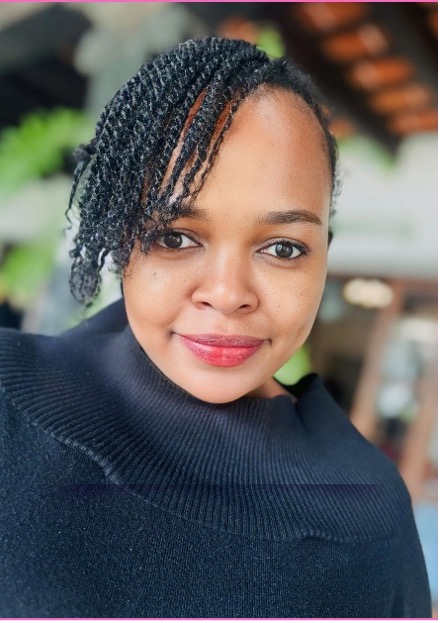 Donna Nyadete is the Women Empowerment Advisor at Trócaire Zimbabwe, with over 8 years’ experience advancing gender equality and women’s empowerment through donor-funded programs supported by FCDO, EU, Irish Aid, and Sida. She specializes in social norms transformation and faith-based GBV prevention. She is an accredited SASA! Faith practitioner and a mentor with the Prevention Collaborative. Donna has led the design, monitoring, and evaluation of impactful initiatives engaging religious leaders and communities to shift harmful gender norms. She holds master’s degrees in Human Rights, Peace and Development, and Gender and Policy Studies, along with professional qualifications in Development Studies, Monitoring and Evaluation and Humanitarian Emergencies and Disaster Management Operations. Donna is passionate about transformative programming and equipping stakeholders to create inclusive, violence-free communities.
