“Ending gender-based violence is not a moral need, it is a public health necessity and a foundation for sustainable development. Evidence gives us the roadmap and collaboration gives us the power to act.” – Dr Siritunga
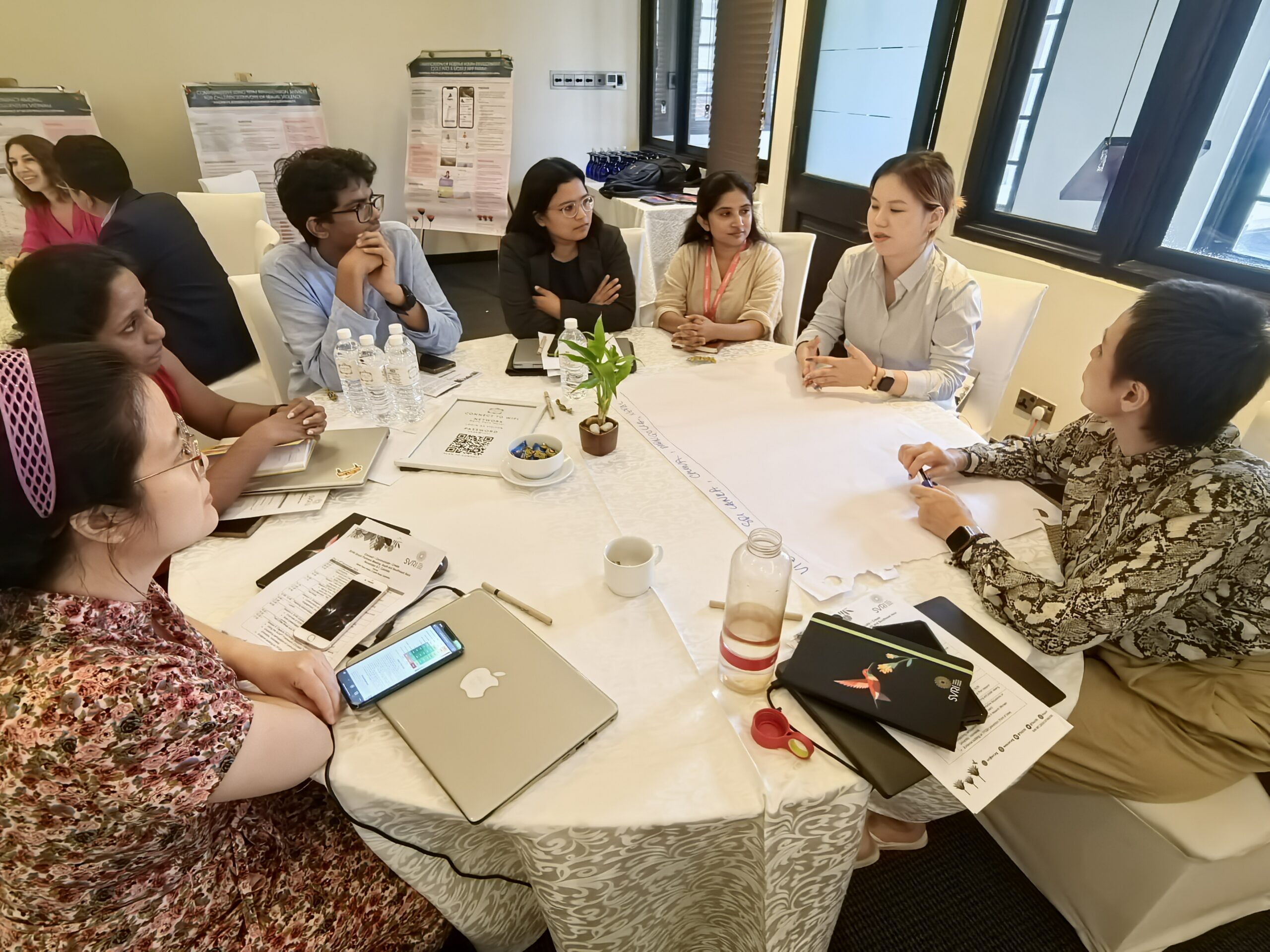
These words from Dr. Siritunga, Director of the Family Health Bureau in Sri Lanka, set the tone for a recent SVRI Grant Partners convening in Sri Lanka, from the 6-7 of November, 2025. The gathering brought together government representatives, researchers, and practitioners from across Asia to share insights, experiences, and challenges in using evidence to strengthen policies and programs. It was also a moment to reflect on what is needed to advance the evidence ecosystem in the region—where investment in research on preventing violence against women (VAW) and violence against children (VAC) remains limited.
One of the most powerful insights from the meeting was that evidence does not exist in water-tight compartments. Instead, it strengthens and impacts programs, institutions, and policies in multiple ways. It can be thought of as a continuum: moving from evidence that shines a light on women’s marginalised experiences of violence, to seed grants that establish proof of concept and generate tested, ready-to-scale interventions, to ultimately high-quality evidence that strengthens and reforms policies and institutions to end violence against women.
The SVRI Research Grants are helping to build this continuum, ensuring that research is not only produced but also used to drive meaningful change.
From building evidence to transforming policy: The impact of SVRI Research Grants
At SVRI, we have realised that often evidence is used to spotlight or shine a light on the experiences of violence of women in all their diversity and those who live at the margins of societal gender norms. Generating evidence through research in such settings pushes governments to acknowledge blind spots in policies and programs that have left out women and marginalised groups.
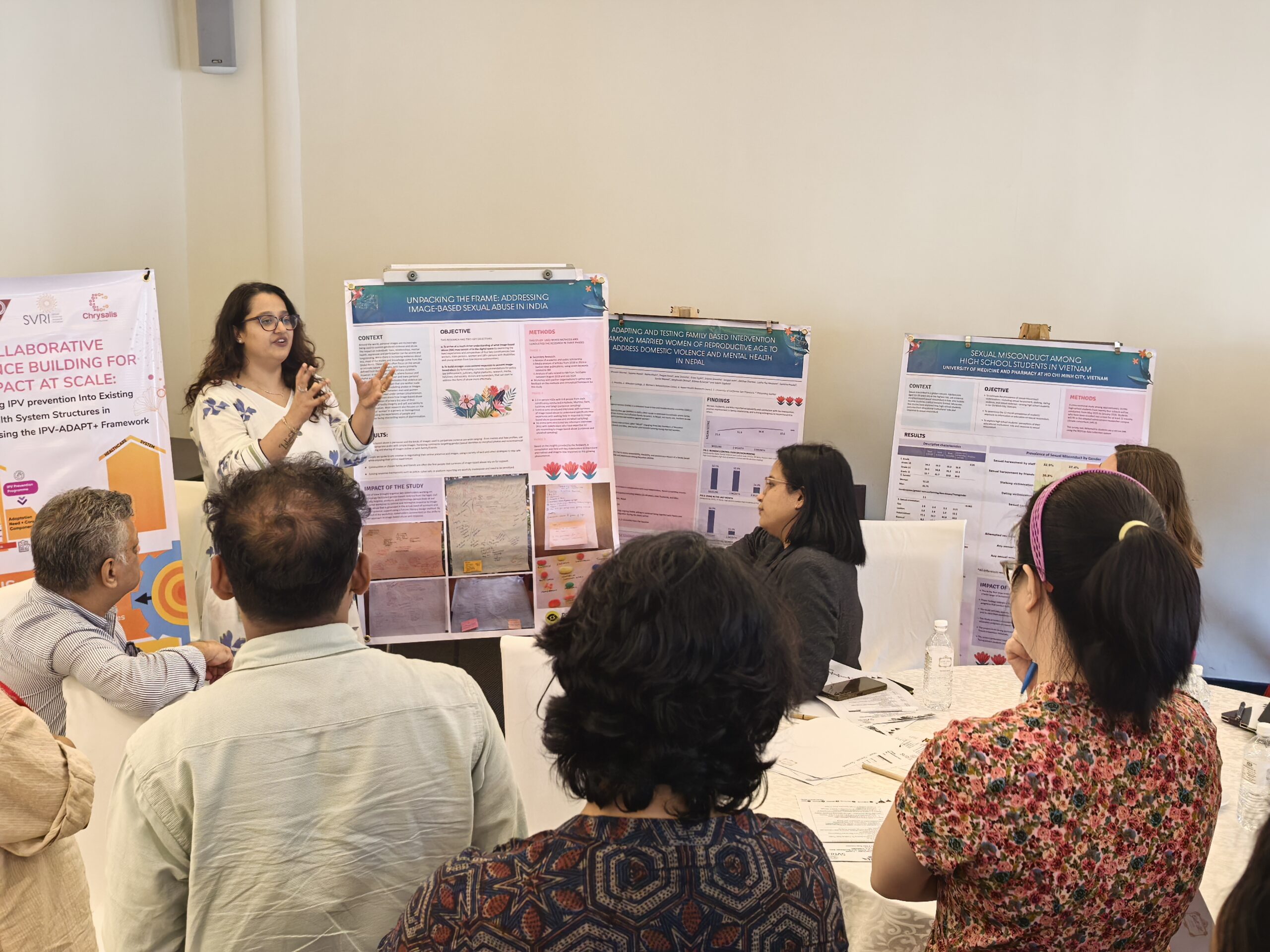
SVRI supports research studies that are helping to fill these gaps. For instance, in Vietnam, a study on sexual misconduct in schools (see poster) is producing the country’s first national-level statistics on this issue, providing critical evidence for protecting children. In India (see poster), Sri Lanka (see poster), and Nepal (see poster), research is tackling the growing concern of Image-Based Sexual Abuse (IBSA). By documenting how IBSA affects women and marginalised communities, and capturing survivors’ experiences throughout the justice systems, these studies are clarifying and standardising definitions and providing evidence to inform prevention and response policies.
Furthermore, the SVRI Research Grants have also established ‘proof of concept’ for culturally relevant innovative models, helping researchers to secure further funding to scale up proven initiatives. For example, in Nepal, Possible Health piloted a culturally sensitive intervention that engaged young married women, their husbands, and influential family members like mothers-in-law, successfully reducing domestic violence and depression in early results (see poster). Building on this foundation, the team secured additional funding to rigorously test the intervention through a randomised controlled trial. What began as a pilot is now on the path to becoming a scalable, evidence-backed solution.
The ultimate goal of evidence is that governments use research to shape ‘Evidence-Based’ Policies and Programs. At this point in the continuum, tested models of violence prevention and response are adapted for uptake in national programs. Here, evidence does not just inform—it transforms institutions and policies, making them more gender-responsive and inclusive.
Chrysalis from Sri Lanka intentionally designed a project to embed evidence into government programming aimed at preventing violence against women (see poster). By aligning research with policymaking processes, Chrysalis demonstrated how evidence can move beyond academic studies to drive systemic change. In Indonesia, Monash University adapted the T-WINGS intervention for transgender women, addressing multiple forms of gender-based violence and improving trans-women’s access to justice (see poster). This adaptation shows how tested models can be expanded to meet the needs of marginalised groups, ensuring that policies and programs are truly inclusive.
What we need to strengthen the evidence on violence against women and children in Asia
While these examples show the power of SVRI Research Grants, they also highlight what is still needed to strengthen the evidence ecosystem in Asia. Capacity building for young researchers is essential, as many promising ideas come from early-career scholars who need mentorship, training, and opportunities to grow. Ethics review processes must also be made more accessible, since in many LMICs review systems are complex, slow, or difficult to navigate. Streamlining these processes will encourage more researchers to undertake rigorous studies without unnecessary barriers.
Finally, sustainable funding is critical. Seed grants spark innovation, but long-term investment is needed to move ideas along the continuum—from pilots to rigorously tested models, to implementing science that embeds evidence-backed interventions into practice, to ultimately scaling programs at national levels.
Building an evidence ecosystem is a long-term process requiring commitment, sharing of resources, and building capacity. While the studies highlighted here spark innovation, fill critical gaps, and test interventions to influence national systems, Asia must invest in people, processes, and resources—supporting young researchers, streamlining ethics, and ensuring sustainable funding flows.
Ending violence against women and children is not only a moral imperative; it is a public health necessity and a foundation for sustainable development. Evidence shows us the way forward, and collaboration ensures we have the power to act.