

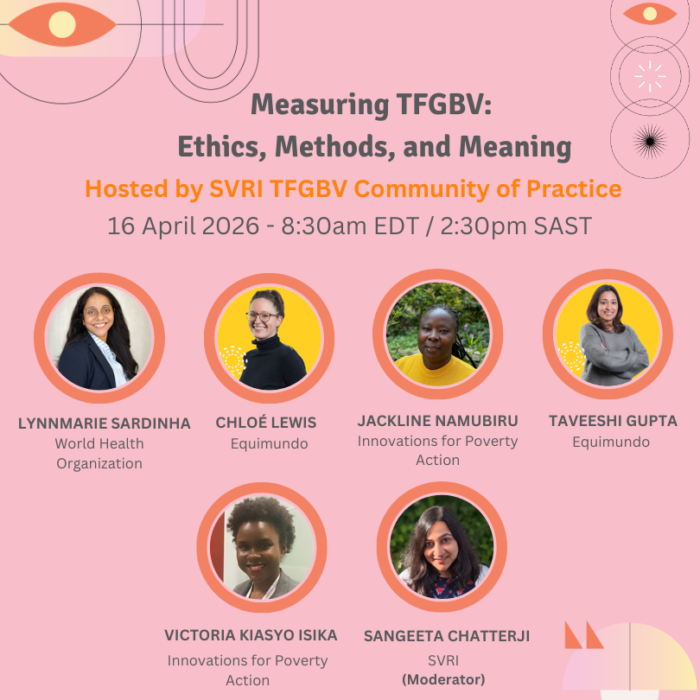
Measuring TFGBV: Ethics, Methods, and Meaning
This blog summarises the lessons learned on the TFGBV CoP webinar on 16 April 2026, which explored TFGBV measurement, contextualised metrics for LMICs, and research ethics.


This blog summarises the lessons learned on the TFGBV CoP webinar on 16 April 2026, which explored TFGBV measurement, contextualised metrics for LMICs, and research ethics.
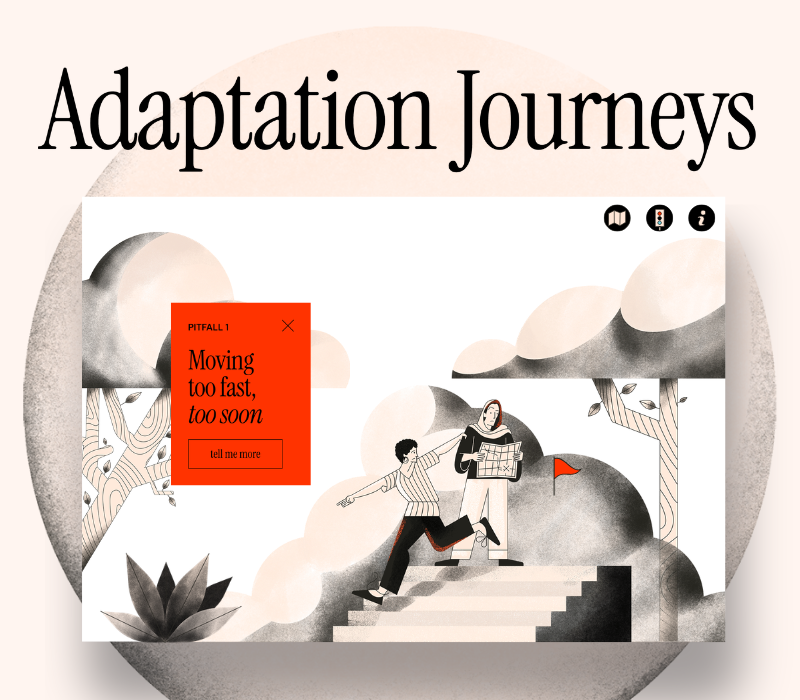
This blog by Carol Shemeri and Lori Michau explains what Adaptation Journeys is, how it emerged at the SVRI Forum 2024, why adaptation matters, and how this new resource can serve as a tool to guide adaptation programmes on violence against women and strengthen prevention efforts across contexts.

This blog, written by researchers from UNICEF, UNFPA and partners, summarises emerging lessons from what impact evaluations are teaching us about how to best measure female genital mutilation, and why accurate measurement is not an “add-on", but it’s foundational to getting to zero.

This blog, written by two scholars from the Tata Institute of Social Science, explores how psychosocial counselling can help women navigate and resist domestic violence from the experiences of 19 women survivors from Mumbai, India.

SVRI Director of Grants Management and Impact, Priti Prabhughate, explains in this blog the work that SVRI Grant Partners are doing to build evidence to end gender-based violence in Asia and transform research into programmes and policies.

In the last webinar of the TFGBV Policy Dialogues, we explored the risks of generative Artificial Intelligence (AI) in fostering TFGBV and how these risks are mainly socio-technical problems embedded in our societies, rather than technological. Read the webinar summary.

This blog by Jane Ndungu, published around the International Day of Persons with Disabilities, calls for an intentional inclusion of women with disabilities in research and programming on violence against women and girls.

Elizabeth Dartnall, Diana Arango, Craig Harding and Avni Amin explain what we need to end violence against women and children: greater long-term investment and political will. They also highlight the elements that have driven progress in four countries and offer five actions for a path forward.

In a statement to mark the start of the 16 Days of Activism for 2025, SVRI calls on funders, policymakers, researchers and practitioners to invest in building rigorous evidence to end violence as an act of resistance.

SVRI, as a organisation registered in South Africa, will join the women's shutdown ahead of the G20 Summit on 21 November 2025 and refrain from work and spending to demand and end to gender-based violence and femicide.
