


Written by Carol Shemeri, from Womanity, and guest author Lori Michau
For many working to prevent violence against women (VAW), 2025 was not just another difficult year. It was a turning point. Across contexts, organisations faced mounting pressures: shrinking resources, rising resistance, and the real risk of losing hard-won gains. And yet, even in this uncertainty, practitioners continued to adapt, persist, and find new ways forward.
This blog explores how Adaptation Journeys emerged from this turning point — what it offers, why adaptation matters, and how it is helping strengthen VAW prevention efforts across contexts.
Adaptation is the deliberate journey and planned process of modifying the content, delivery or implementation of a programme to optimise its fit for a different context or population. The process upholds the original program’s core components to achieve intended outcomes and impacts.” – From the IPV-Adapt+Framework
From silos to collaboration: Why Adaptation Journeys was created
The inspiration for Adaptation Journeys arose from shared experience and dedication to good practice. It grew out of a desire to connect, to make programming as responsive and impactful as possible for women in the communities where we work.
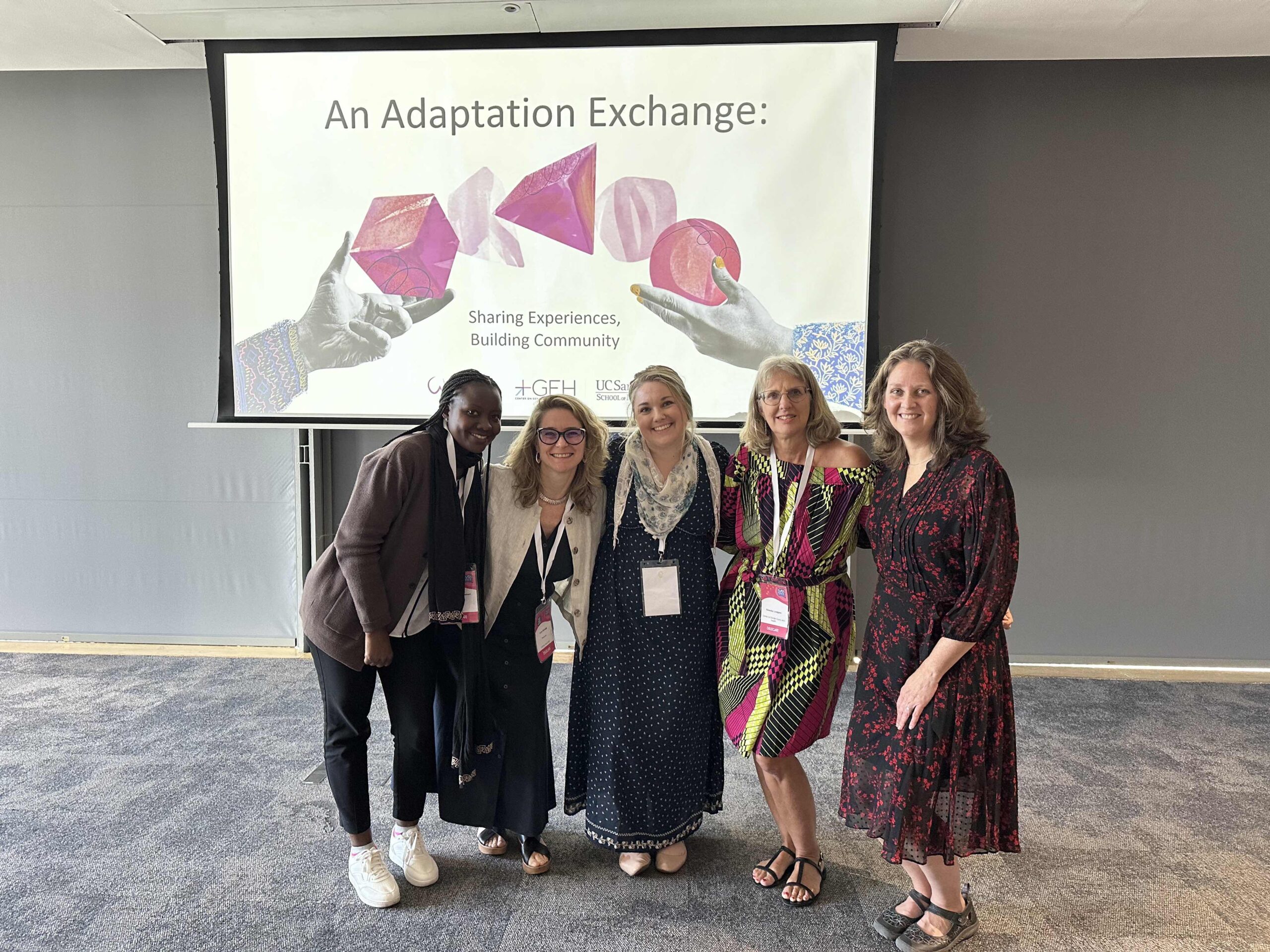
At the SVRI Forum in 2024, Womanity convened a closed, participant-driven session titled Adaptation Exchange. Practitioners, researchers, and funders came together to share real experiences of adapting VAW prevention interventions across diverse contexts. What emerged was not just knowledge exchange, but a strong appetite for continued connection and collective learning.
What made this process so powerful was not only the quality of experience and thinking, but the community that grew around it. Many of us began as strangers but quite quickly became a trusted circle, sharing openly, learning from each other and bringing a sense of solidarity and even joy to the work, which feels especially needed right now.” — Lori Michau, VAW Prevention Activist & Co-Founder, Raising Voices
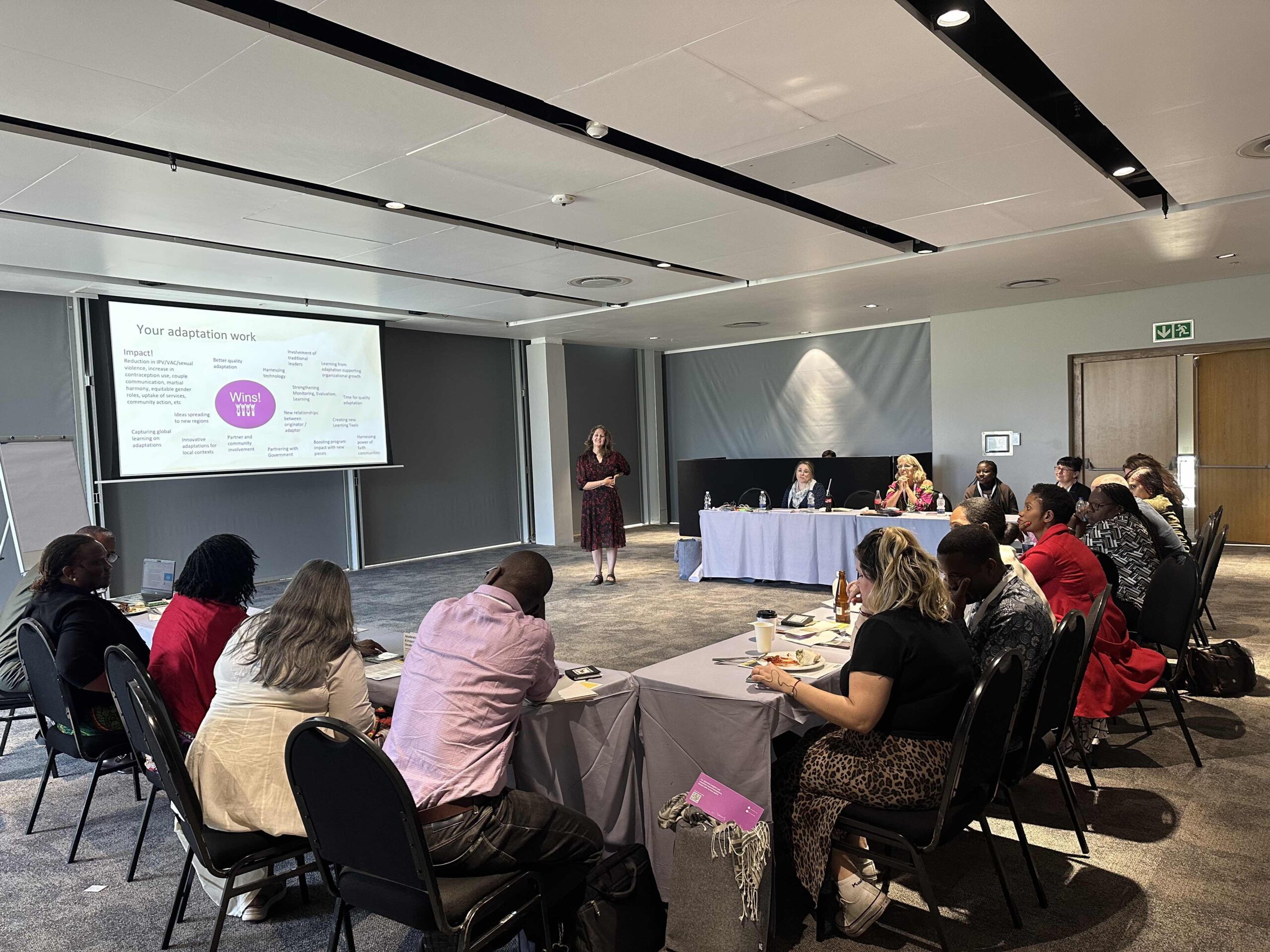
Participants called for more than one-off conversations. They wanted a community of colleagues immersed in similar programming, a space for honest reflection, and practical resources to support adaptation in real time.
Building on this momentum, and with support from Lori Michau, a long-time VAW prevention activist, Womanity continued to convene the group virtually post-Forum. Despite ongoing funding challenges and shrinking civil society space, 10 diverse partners [1] expressed a clear willingness to collaborate. Many groups already work on adaptation and there is a rich knowledge base, but often these learnings stay within a programme, which perpetuates a feeling of working in silos and going it alone through our adaptation journeys. This small community hungered to share experiences and learn from each other.
So rich were the discussions that together, the group raised a critical question: What would genuinely help other practitioners, funders, and researchers navigate VAW prevention adaptation in their day-to-day work?
The result is Adaptation Journeys, a resource designed not to duplicate existing knowledge, but to offer grounded, practice-based insights drawn from lived experience.
What Adaptation Journeys offers: Practical learning for real challenges
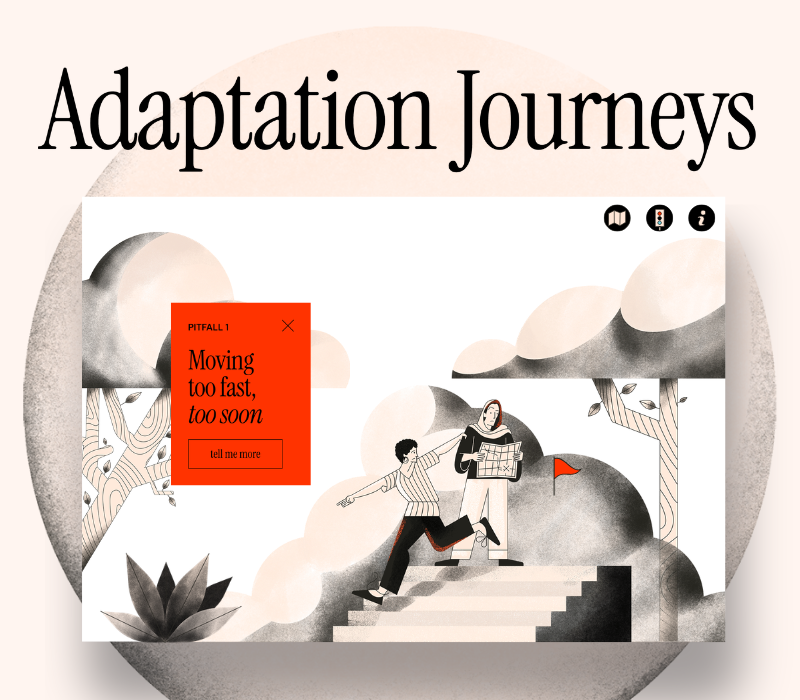
Launched in March 2026, Adaptation Journeys is an interactive, online resource co-created by a collective of practitioners, researchers, and funders. It brings together practical knowledge on adapting VAW prevention programmes across contexts.
At its core are seven common adaptation challenges — referred to as “pitfalls” — drawn directly from real-world experiences in diverse settings. Each one is unpacked through reflection: what went wrong in the adaptation process, how teams recognised it, how they responded, and what changed as a result. All written in a way that is accessible and relatable, to support greater adaptation learning, uptake of good practices, and increased collective knowledge across the field.
Alongside these insights, the resource provides:
- Practical tips tailored for practitioners, funders, researchers, and technical advisors
- Key considerations to help teams stay aligned with programme goals
- Brief audio clips of practitioners sharing key learnings
- Guidance on navigating complexity, including the role of soft skills in adaptation
A key feature is the Discussion Guide, which enables teams to actively engage with the material. Whether used in a single session or across multiple discussions, it encourages reflection on both the shared pitfalls and the teams’ own adaptation experiences.
The resource is not static. Users are encouraged to document and share their own challenges and strategies, contributing to a growing body of collective knowledge.
Why adaptation matters for the future of VAW prevention
Despite persistent — and in some places increasing — levels of violence against women and girls, there is strong evidence that prevention interventions work. The challenge lies in ensuring these interventions remain effective across different contexts.
Adaptation must be approached with care. It requires balancing flexibility with fidelity, ensuring that core components of interventions are not lost. It also demands ongoing reflection, attention to context, and a willingness to learn and unlearn.
Adaptation offers a pathway to do just that. It allows practitioners and funders to expand the reach of proven approaches while remaining responsive to local realities, thereby making the most of precious financial resources and the trust that communities place in VAW prevention programming. At its best, adaptation builds not only impact, but also solidarity, shared learning, and hope across contexts.
The microsite provides those working on new adaptation processes with insights into what it takes to have positive impacts on communities. The journeys reveal the missing pieces that sometimes get overlooked or are not always obvious but are critical in prevention programming. I hope sharing CREAW’s journey honours special aspects that have impacted our prevention programme, and will help others.” — Angelina Cikanda, Fundraising and Program Development Manager, CREAW, Kenya
What’s next: Strengthening the adaptation community
Adaptation Journeys is only the beginning. Looking ahead, Womanity is committed to advancing adaptation as a key strategy for scaling VAW prevention.
In 2026, efforts will focus on strengthening a community of practice and creating more opportunities for shared learning. This includes engagement at the upcoming SVRI 2026 Forum, where Womanity and partners, including Prevention Collaborative, Raising Voices, What Works, and the Center on Gender Equity and Health will host a preconference workshop.
Titled Meeting the Moment: Ethical and Effective Adaptation for VAWG Prevention Scale in Challenging Times, the session will explore foundational principles of adaptation, frameworks and approaches, strategies for equitable partnerships, common challenges, and practical mechanisms to address them. It will also create space to reflect on adaptation in the context of reduced funding, growing backlash, and sustainability concerns.
As the landscape for VAW prevention continues to shift, adaptation will remain essential, not just as a strategy, but as a collective practice rooted in learning, solidarity, and resilience.
Adaptation Journeys is one step in that direction. Its value lies not only in the resource itself, but in the community it continues to support — one where practitioners, funders, and researchers can learn from one another, navigate challenges together, and strengthen their work in ways that are responsive, ethical, and grounded in real-world experience.
We invite practitioners, funders, and researchers to engage with the resource, contribute their own experiences, and be part of a growing community committed to advancing VAW prevention through adaptation.
[1] Asia Foundation, Timor Leste; Associação Cabo-Verdiana de Luta Contra Violência Baseada no Género, Cape Verde, Center on Gender Equity and Health, University of San Diego, USA; Center for Rights Education and Awareness (CREAW), Kenya; Equality Insights Lab, global; International Planned Parenthood Federation, global; Prevention Collaborative, global; Raising Voices, Uganda; TearFund, DRC; Womanity, global.
