Gender-based violence (GBV) in higher education institutions (HEIs) is a globally pervasive issue, with significant gaps in evidence and understanding, particularly in low- and middle-income countries (LMICs). To address these gaps, particularly in Africa and the Middle East, the SVRI has conducted a multi-method study to establish research priorities and policy recommendations that can make campuses safer.
About the project

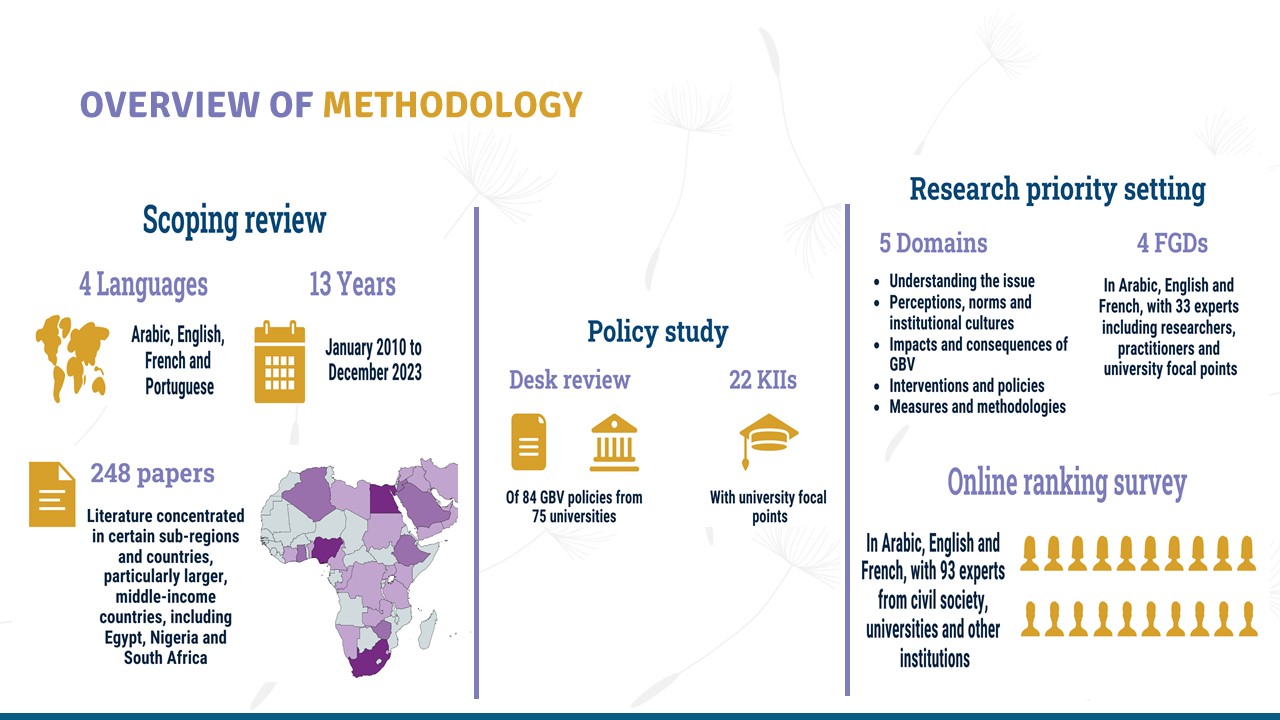
- Review published literature (2010–2023) on GBV in HEIs in Africa and the Middle East to identify main research gaps.
- Analysis of GBV-related policies and interviewing university staff across HEIs in Africa and the Middle East.
- Identification of key gaps and research directions through a priority-setting exercise with 126 of researchers, practitioners, and academics
- Strengthen the evidence base on GBV in universities and colleges;
- Identify priority areas for future research that are contextually relevant and actionable; and
- Support regional and institutional policy reform grounded in data and survivor-centred approaches.
Methodology
To identify shared research priorities, SVRI and partners adapted the Child Health and Nutrition Research Initiative (CHNRI) approach — a transparent, inclusive process that brings together diverse perspectives to co-create priorities.
Key findings
The process identified critical evidence gaps and produced five validated priority research domains to guide future work:
-
- What is the prevalence of and risk and protective factors for different types of GBV in higher education institutions, including under-researched forms of GBV (e.g., ‘sex for grades’, gender micro-aggressions, and technology-facilitated GBV) and among under-researched groups (e.g., LGBTQI+ individuals and people with disabilities)?
- What are the demographic and contextual characteristics of GBV perpetrators in higher education institutions (distinguishing between staff and student offenders), and which risk and protective factors predict their likelihood of perpetration?
-
- What is the impact of normative barriers—measured through indices of stigma, shame, and victim-blaming attitudes on GBV survivors’ help-seeking, case reporting, and access to services in higher education institutions, and how does this vary across different intersectional groups (e.g. gender, ethnicity, disability and socioeconomic background)?
- What role do peer norms and informal social networks play in reinforcing or mitigating GBV within higher education settings, and how do these social dynamics affect the willingness of individuals to report incidents or intervene in potential cases?
-
- What are the quantifiable short- and long-term educational and professional consequences of GBV for students and staff in higher education institutions, as measured by indicators such as academic performance, retention and graduation rates, and career progression?
- How do the health, psychosocial, and educational impacts of GBV differ according to
intersectional characteristics (e.g., age, gender, sexuality, and disability) in higher education settings?
-
- How effective are GBV prevention interventions in reducing the incidence of GBV in higher education institutions, including those targeting social norms and behaviour change, and how does this vary across intersectional groups (e.g., age, gender, sexuality, disability, and ethnicity)?
- To what extent do GBV awareness-raising interventions, including targeted communications campaigns, in higher education settings affect the frequency of GBV reporting and the utilisation of support services?
-
- What are the most reliable / valid / sensitive standardised tools for measuring sexual harassment in higher education settings, including online and offline forms of harassment?
- Which research methodologies including non-experimental approaches, qualitative methods, and participatory designs provide the most robust and actionable evaluation of the effectiveness of GBV prevention initiatives in higher education settings?
Together, these priorities aim to inform policies, interventions, and research investments that create safer, more equitable universities across both regions.
Next steps to address GBV in higher education:
- Universities should implement survivor-centred policies and accountability systems backed by trained staff and clear lines of responsibility.
- Challenge campus institutional norms and culture such as stigma and victim-blaming through visible leadership and safe spaces for open dialogue.
- Fund research to expand the evidence base, addressing gaps and overlooked groups, including staff and patterns of perpetration.
- Scale proven interventions beyond pilots into sustainable institutional and national frameworks.
- Invest in research capacity and infrastructure in low- and middle-income countries, enabling local scholars and institutions to lead and apply evidence for long-term change.
Launch Webinar: GBV in HEI in Africa and the Middle East – Evidence, Policies, and Research Priorities
The final report was launched on 29 September 2025 at 3:00 pm SAST. The session featured insights from leading experts who reflected on the complexity of GBV in higher education institutions (HEIs) and discussed pathways for systemic and sustainable change. Through this launch, the SVRI and IDRC aimed to catalyse collaboration among researchers, practitioners, policymakers, and institutions to advance evidence-informed, survivor-centred responses within higher education settings.
- Increase Funding for Research and Capacity: Sustainable funding is needed to attract researchers, build institutional capacity, and ensure policies are implemented effectively.
- Centre Institutional Culture in GBV Response: Research and practice must focus on shifting norms, leadership commitment, and mechanisms that build trust, accountability, and survivor-centred responses.
- Invest in Comprehensive Training and Awareness: Mandatory, continuous GBV training for students, staff, and faculty is essential.
For a deeper dive into these recommendations, you can view the full discussion here.
Project outputs
We have compiled the main findings and recommendations of the study in both a general and academic brief in English, French and Arabic. Find them below, as well as the final report with all the annexes.