


Since 2014, the SVRI has funded 113 innovative research projects across 57 countries — investing over USD 11 million to advance research on violence against women (VAW), violence against children (VAC), and other forms of gender-based violence (GBV).
Our grant-making approach
SVRI funds and supports researchers and practitioners in low- and middle-income countries (LMICs) to conduct rigorous, action-oriented research that drives real-world change. Our grants respond to priority knowledge gaps, build on existing evidence, and generate findings that are locally relevant — not shaped by donor agendas.
We prioritise LMIC-led projects, invest in underrepresented geographies, and support a diversity of methodologies — strengthening the technical capacity of the VAW and VAC field where it matters most.
“The SVRI Research Grant has given us the ability to undertake a research project per se, and that has been an amazing opportunity. (…) It lays the groundwork for further work“. — Shyamala Gomez, Center for Equality and Justice, Sri Lanka 2025
Building the evidence where it matters most
SVRI grants address a critical gap by generating locally-led evidence on VAW, VAC, and GBV in the places where women and children face the highest risk — contexts marked by economic hardship, conflict, and deep structural inequalities.
SVRI grant-making provides funding to research institutions based in low- and middle-income countries across Africa, Latin America & the Caribbean, South Asia, East Asia & the Pacific, the Middle East & North Africa, and Europe & Central Asia.
A grant-making programme to catalyse the field
Since 2014, our grants have served four distinct purposes:
- Formative Research: Generating foundational evidence in countries and contexts where data is scarce and certain forms of violence remain unrecognised — including conflict-affected settings like DRC, Syria, Lebanon, and Palestine, and underexplored contexts like Mongolia and Armenia.
- Prevention: Testing and piloting prevention models across a range of approaches — from parenting interventions and community-based programmes, to work with men and boys on gender norms, women’s economic empowerment, and tools for early identification of child sexual violence.
- Response: Trialling interventions that strengthen how systems respond to violence, including technology-based solutions, classroom curricula, and training for doctors, teachers, police, and community leaders.
- Measurement: Improving how the field measures violence, such as validating tools, developing scales, and proposing stronger outcomes for tracking IPV and GBV.
Our grants have covered these and other specific topics such as intersections between VAC & VAC, technology-facilitated gender-based violence (TFGBV), violence against children research, conflict and humanitarian crises, and GBV in higher education with a special focus on STEM.
SVRI Research Grant projects throughout the years
SVRI grants don’t just generate evidence — they drive change. From pilot projects that attract major funding, to research that reshapes national policy, our grant partners are translating locally-led evidence into real-world impact.
“The support of SVRI has not only been technical, but they have also supported us with a community and network, bringing an intersectional and ethical approach that has helped us achieve these transformations.” – Isaac Retana, Psychotherapist for the CORE Model, SVRI Grant Partner 2024, Mexico.
Why the SVRI Research Grant matters
SVRI grants create catalytic change by:
- Filling critical evidence gaps that inform field priorities and funding decisions
- Influencing national policies through locally generated, contextually relevant evidence
- Opening funding pipelines by demonstrating proof of concept that attracts larger investments
- Building LMIC research capacity that extends beyond individual grant periods
- Elevating marginalised voices by documenting experiences often invisible in global research
- Creating pathways to scale from pilot interventions to rigorously tested solutions
“The SVRI grant is a very flexible grant that has given us the opportunity to generate knowledge, implement a gender transformative approach and adapt it through the process. This has allowed us to generate evidence to influence the future of the project, as well as public policy in Peru.” – Daniel Orrego, Futbol Mas Perú, Peru, 2023
From pilot to scale
Some of the most significant impact from SVRI grants comes not from the research itself, but from what it makes possible next. By establishing proof of concept through rigorous methods — pre-post assessments, quasi-experimental designs, and RCTs — grant partners create the evidence base needed to attract larger investments and scale what works.
In the past three years alone, four grant partners have secured additional funding on the back of SVRI-supported research.
Possible Health (Nepal, 2023) piloted a culturally sensitive therapeutic intervention with newly married women, their husbands, and mothers-in-law, showing early promise in reducing domestic violence and depression. The team went on to secure funding for a full randomised controlled trial — moving from a promising pilot to a scalable, evidence-backed solution.
Strengthening institutions through evidence
Beyond the research itself, SVRI grant partners are driving systemic change — translating findings into concrete policy reforms and improvements in service delivery across health, education, and law enforcement.
GRADE (Peru, 2019) tested and improved the National Police Home Visits programme for IPV survivors, demonstrating that home visits increased women’s likelihood of seeking justice and police support. The programme has since scaled to additional provinces, and home visit training is now institutionalised for all police personnel.
Anusandhan Trust (Mumbai, India, 2019) built capacity across 11 public hospitals to replicate their “Dilaasa” model — training health workers to screen, identify, and intervene early with IPV survivors.
Instituto Nacional de Salud Pública (Mexico, 2022) developed a course and diploma programme for government staff responsible for preventing and responding to child sexual abuse, now embedded in provincial training for child protection workers.
Emerging evidence: Technology-facilitated gender-based violence (TFGBV)
As digital spaces become sites of violence, the evidence base must keep pace. SVRI has funded 9 grants on technology-facilitated gender-based violence (TFGBV) — generating evidence on its forms, impacts, and measurement, with particular attention to marginalised groups of women.
Muhimbili University (Tanzania, 2025) is developing and validating a measurement tool to assess TFGBV prevalence among students in higher education institutions.
Meedan (India, 2023) researched gendered disinformation and trained machine learning algorithms to identify and prevent it. Building on this work, Meedan secured additional funding to study how gendered disinformation influences elections in Togo, Pakistan, and Argentina.
Grant partners in India (2024) and Sri Lanka (2025) are advancing understanding of image-based sexual abuse among diverse women in LMICs — and assessing whether existing laws and programmes adequately respond to their needs.
Adapting what works to local contexts
Global evidence is only useful if it can be applied locally. SVRI grants support partners to adapt proven intervention models — including Parenting for Lifelong Health, WINGS, and UBL — to the specific cultural, social, and structural contexts of their communities, reaching diverse women, transgender women, women with disabilities, and women living with HIV.
Social Fund “Center for Scientific and Practical Initiatives” (Kazakhstan, 2023) adapted the WINGS intervention for women who use drugs, sex workers, women living with HIV, and transgender women, with a community advisory board guiding the process. Findings influenced government-run shelters, and the adapted programme was adopted by mainstream crisis centres — with the State Crisis Center expanding services to include HIV-positive women.
Strengthening LMIC research capacities
Beyond its outward impact, SVRI’s grant-making consistently benefits the individual researchers and organisations involved in each research team. Alongside funding, every grant offers bespoke capacity strengthening and mentorship tailored to each team’s specific needs — whether that means sharpening research methods, deepening ethics practice, or building the confidence to conduct research to the highest possible standard.
While our partners and their institutions are already strong, this sustained mentorship helps research teams build on their existing strengths and develop new capacities and skills, growing careers beyond the life of the project, mentoring younger staff, strengthening the research capacities of NGOs and other non-research institutions, and fostering collaborations among local and regional actors.
Partners also grow more capable of advocating for what they need to support their work, making the grant journey as much about people as it is about research.
“The SVRI has been fantastic for our university and partners. Besides the funds, we had technical assistance on any issues we had to refine such as research ethics and how to make our research better” – Ari Ho-Foster, University of Botswana, SVRI Grant Partner 2023, Botswana
Reaching beyond research
SVRI grant partners don’t stop at publication. They take their findings to global stages, local media, and public conversations — ensuring that LMIC-generated evidence shapes debates far beyond academia.
On global platforms: AMPF (Morocco) presented research on reproductive violence at the FIGO World Congress, bringing LMIC evidence to an international sexual and reproductive health audience. Stellenbosch University presented at the BRICS 10th Young Scientists Forum in Brazil on TFGBV and digital literacy for women with disabilities in the Global South.
In local and national media:
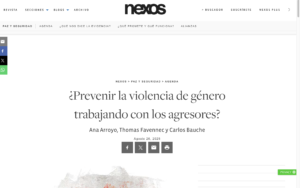
- LAB-CO & ProSociedad (Mexico, 2024) published findings on interventions with male perpetrators of violence in Nexos, one of Mexico’s leading political journals.
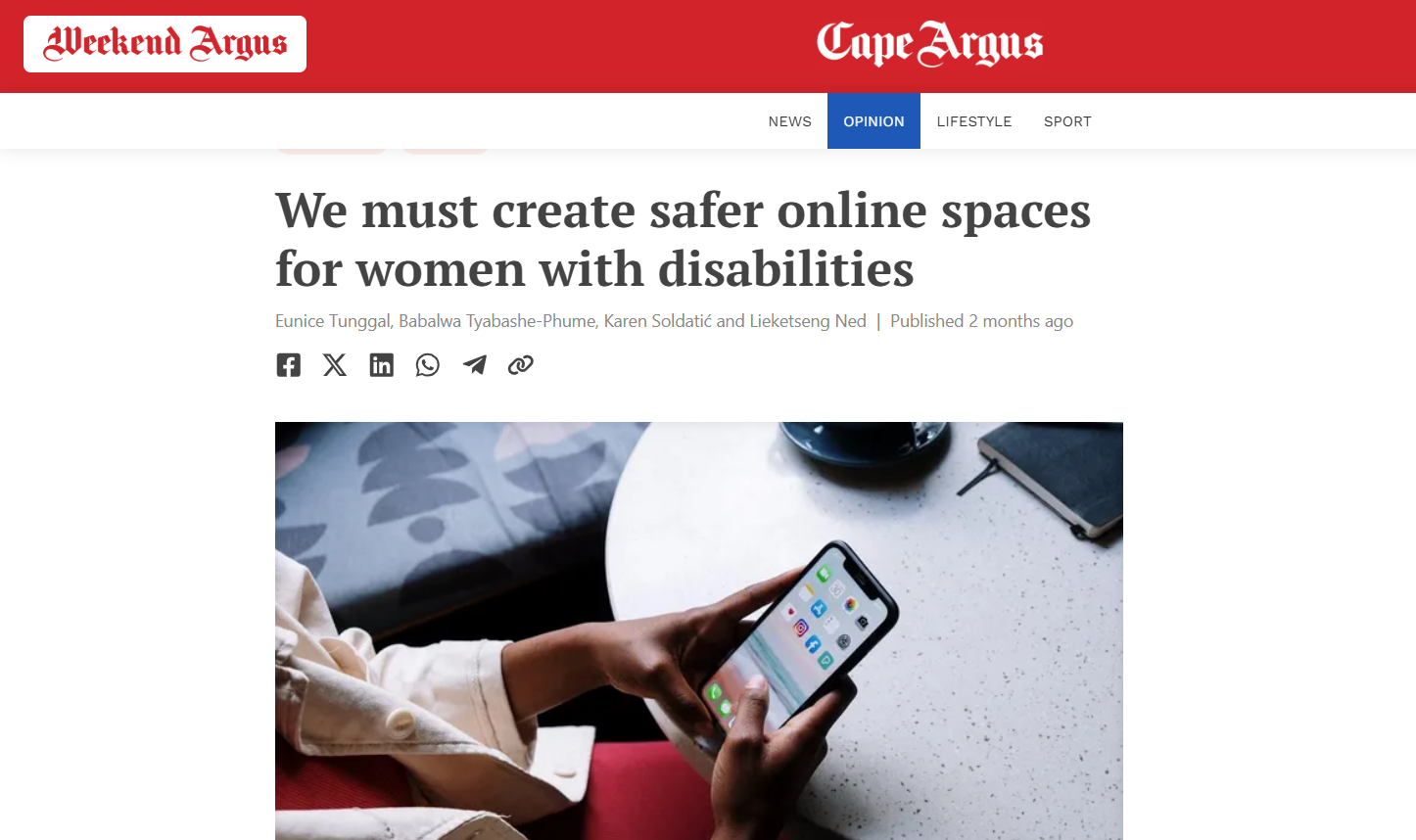
- Stellenbosch University (South Africa, 2024) published articles in national newspapers on the need for safe online spaces for women with disabilities, with lead researcher Babalwa Tyabashe-Phume also featuring on the Disability Dialogues podcast.
- Researchers from the University of Botswana (Botswana, 2023) appeared in national media to discuss how stigma prevents IPV survivors from seeking help — and what needs to change.
- Yuliana Melkumyan, the lead researcher of Astra Foundation for Health Protection and Prevention of Violence (Armenia, 2024), participated in a podcast show by Hripsime Grigoryan.
Winners of the SVRI Research Grant 2026: Knowledge for Action to End VAW and VAC
Winners of the SVRI Research Grant 2025: Knowledge for Action to End VAW and VAC
Winners of the SVRI Research Grant 2024: Knowledge for Action to End VAW and VAC
Winners of the SVRI Research Grant 2023: Knowledge for Action to End VAW and VAC
Winners of the SVRI Research Grant 2022: Knowledge for Action to End VAW and VAC
Winners of the SVRI Research Grant 2021: Knowledge for Action to End VAW and VAC

Development Marketplace 2019: Innovations to Address Gender Based Violence, 9 April 2019, Washington DC, USA
On 9 April 2019, the Sexual Violence Research Initiative and the World Bank Group held the Development Marketplace Award Ceremony…

Development Marketplace 2018: Innovations in Preventing Gender Based Violence, 17 April 2018, Washington DC, USA
The SVRI in partnership with the World Bank held the SVRI and World Bank Group Development Marketplace Awards on 17…

Innovations to Prevent GBV: Building evidence for effective solutions, 18 April 2017, Washington, D.C, USA
The SVRI in partnership with the World Bank held the SVRI and World Bank Group Development Marketplace Awards on 18…

Brief: Preventing sexual and intimate partner violence through funding innovative research
SVRI & World Bank Group. (2017). Brief: Preventing sexual and intimate partner violence through funding innovative research. Pretoria: SVRI. Abstract…
