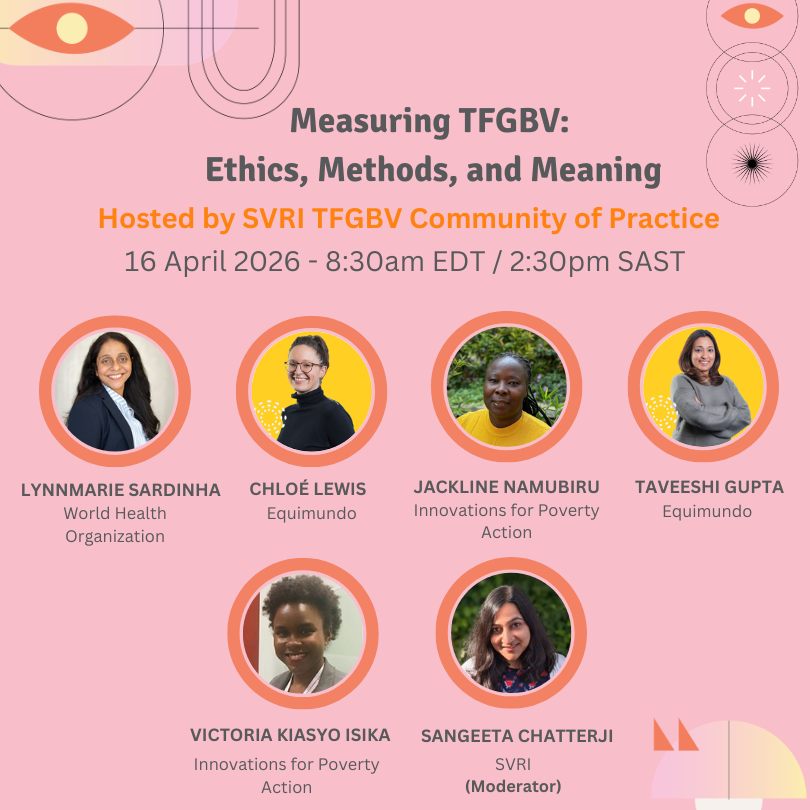
On April 16 2026, the SVRI TFGBV Community of Practice (CoP) launched its first event of 2026, “Measurement & Ethical Research on TFGBV.” Speakers included Victoria Isika (IPA), LynnMarie Sardinha (WHO), and Taveeshi Gupta and Chloé Lewis (Equimundo). They discussed their process for contextualizing validated instruments in low- and middle-income countries, WHO’s integration of TFGBV as a modality within existing IPV surveys, and a systems lens examining masculinities and digital ecosystems.
Launching SVRI’s TFGBV CoP Working groups
To kick start the event, Alexandra De Filippo, CoP facilitator, shared the CoP’s plan to launch two new working groups. She introduced Francia Baltazar, lead of the Measurement & Ethical Research working group, and Barsha Chakraborty, lead of the Policy Influence, Regulation, and Advocacy group. Both groups will focus on practical outputs and bring together CoP members from diverse backgrounds. You can register for the working groups here.
The challenge of measuring and defining an evolving field
Sangeeta Chatterji, the event moderator, opened the discussion by emphasizing the difficulty of developing measurements for a construct like TFGBV, where new forms of violence are still being identified and defined. The event provided an opportunity to share measurement resources developed across institutions and insights on how to best interpret them.
Victoria Isika presented IPA’s compendium of 19 validated quantitative instruments measuring cyberbullying, tech-facilitated IPV, online harassment, image-based sexual abuse, sextortion, and cyber dating abuse. The systematic review (2009–2025) shows that most validated instruments were developed in high-income countries, with limited representation from LMICs. She also highlighted key methodological and ethical considerations, drawing on UNFPA and ICRW guidelines, to inform policies, programs, and decision-making in a field that continues to evolve.
This mapping of quantitative instruments was an initial phase of IPA’s TFGBV project in Nigeria and Uganda. It was followed by qualitative workshops with women from diverse socioeconomic backgrounds using vignettes to better understand local experiences. Findings showed that perpetrators were often known men (partners, ex-partners, bosses, coworkers), although women also contributed to certain harms such as rumor spreading and sharing intimate images. Lower-income women faced greater exposure to job scams and financial fraud, while higher-income women experienced harms related to visibility. These insights supported engagement with stakeholders and the adaptation of measurement tools to local realities, with a contextualized instrument being currently validated in Uganda.
Challenges in TFGBV measurement
LynnMarie Sardinha explained WHO’s strategy of measuring TFGBV as a modality rather than a separate form of violence, integrating it into existing measures of physical, sexual, psychological, and economic IPV, as well as non-partner sexual violence. The WHO Multi-Country Study instrument (2005) is currently being updated to include pilot-tested questions on technology-facilitated controlling behaviors and the non-consensual sharing of intimate images.
She also outlined key measurement challenges, including identifying who has access to technology (and who is excluded), balancing standardization with local context, capturing diverse forms of violence and perpetrators, defining appropriate timeframes, and managing respondent and interviewer fatigue. These challenges are closely linked to ethical considerations such as ensuring participant safety, protecting confidentiality, and training teams to minimize distress.
A systems lens: masculinities and digital ecosystems
Tavishi Gupta and Chloé Lewis presented Equimundo’s approach, which frames TFGBV as a structural issue rooted in patriarchy and rigid gender norms. They emphasized the need to analyze three interconnected systems: social norms (e.g., expectations around masculinity), digital ecosystems (algorithms, amplification, monetization, platform design), and broader socioeconomic conditions (precarity or isolation).
“We can’t just look at sort of the binary of perpetration and victimization, and that’s why we lean into calling it tech-facilitated gender-based violence, because that helps us underscore why the system’s lens is important.”
Research with men in Brazil and South Africa shows that those who hold “man-box” beliefs are more likely to adopt misogynistic attitudes online, illustrating the link between offline and online behaviors. At the same time, many men reported feeling a lack of control over their social media feeds and recognized how algorithms amplify divisive and harmful content. Even when seeking neutral content (e.g., dating, career, fitness), users were quickly exposed to misogynistic narratives.
Equimundo’s methodology combines standardized surveys with network mapping of over 600 manosphere accounts across platforms such as YouTube, Instagram, X, and TikTok. In South Africa, this content intersected misogyny with anti-migrant xenophobia, particularly targeting Nigerian and Zimbabwean communities, demonstrating how harmful narratives adapt to specific local contexts.
There is also growing attention to TFGBV targeting women political leaders, particularly in relation to gender backsliding. This work is part of the Global MenCare Changemakers initiative, which includes a democracy and violent extremism track examining violent misogyny as a pathway to extremism.
Moderator

Sangeeta Chatterji, Research Director – Sexual Violence Research Initiative
Sangeeta is the Research Director at the Sexual Violence Research Initiative with over 15 years of experience in violence prevention and social work. Sangeeta specializes in developing rigorous measurement tools and testing gender-transformative interventions in low- and middle-income countries, with a particular emphasis on social norms and economic empowerment.
Speakers

Taveeshi Gupta, Director of Research, Evaluation, and Learning – Equimundo
Taveeshi is the Director of Research, Evaluation, and Learning at Equimundo and a globally recognized expert in masculinities and gender equality. With a PhD in Developmental Psychology from NYU, Taveeshi leads groundbreaking research on gender norms and serves as an advisor to the UN, OECD, and the Lancet Commission. Her work focuses on bridging the gap between psychology and social change, specifically addressing the impact of the “manosphere” and the transformative power of caregiving.

Chloé Lewis, Deputy Director of Research, Evaluation, and Learning – Equimundo
Chloé is the Deputy Director of Research, Evaluation, and Learning at Equimundo, with 15 years of expertise in gender and armed conflict. Chloé specializes in the prevention of sexual and gender-based violence. She has collaborated with the World Bank and the U.K. Ministry of Defence to bridge the gap between academic scholarship and global policy.
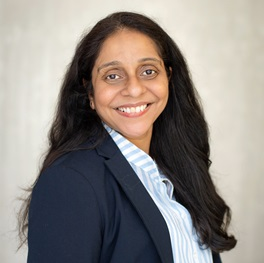
LynnMarie Sardinha, Technical Officer on Violence Against Women Data and Research – World Health Organization
LynnMarie is a Technical Officer on Violence Against Women Data and Research at the World Health Organization, where she co-leads the WHO-UN Women Joint Programme on Violence against Women Data and Measurement. With over 16 years of expertise, LynnMarie leads the development of global prevalence estimates to inform the SDGs and international health policy.
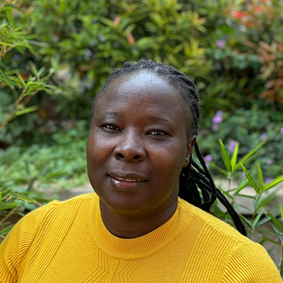
Jackline Namubiru, Senior Associate, Gender Research and Policy – Innovations for Poverty Action
Jackline Namubiru is a Senior Associate for gender research and policy with IPA’s Intimate Partner Violence Initiative. In this role, she supports the research and policy agenda aimed at informing global development policy and practice by expanding and improving the scientific evidence on pathways to mitigate IPV.
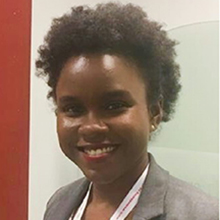
Victoria Kiasyo Isika, Associate Director of Policy and Gender for IPA East Africa – Innovations for Poverty Action
Victoria is the Associate Director of Policy and Gender for IPA East Africa, where she leads the strategy for advancing evidence-based policies to improve the lives of women and girls. Victoria has a deep operational background, having served as Deputy Country Director for IPA Rwanda and Uganda and as a consultant for the World Bank’s Great Lakes SGBV project.